
TIRI MASAWI
Namibia expects to complete its Green Industrialisation Policy and related laws before the end of 2026. The plans come as the country looks to attract more than N$980 billion for projects ranging from port and railway upgrades to green hydrogen production and new factories.
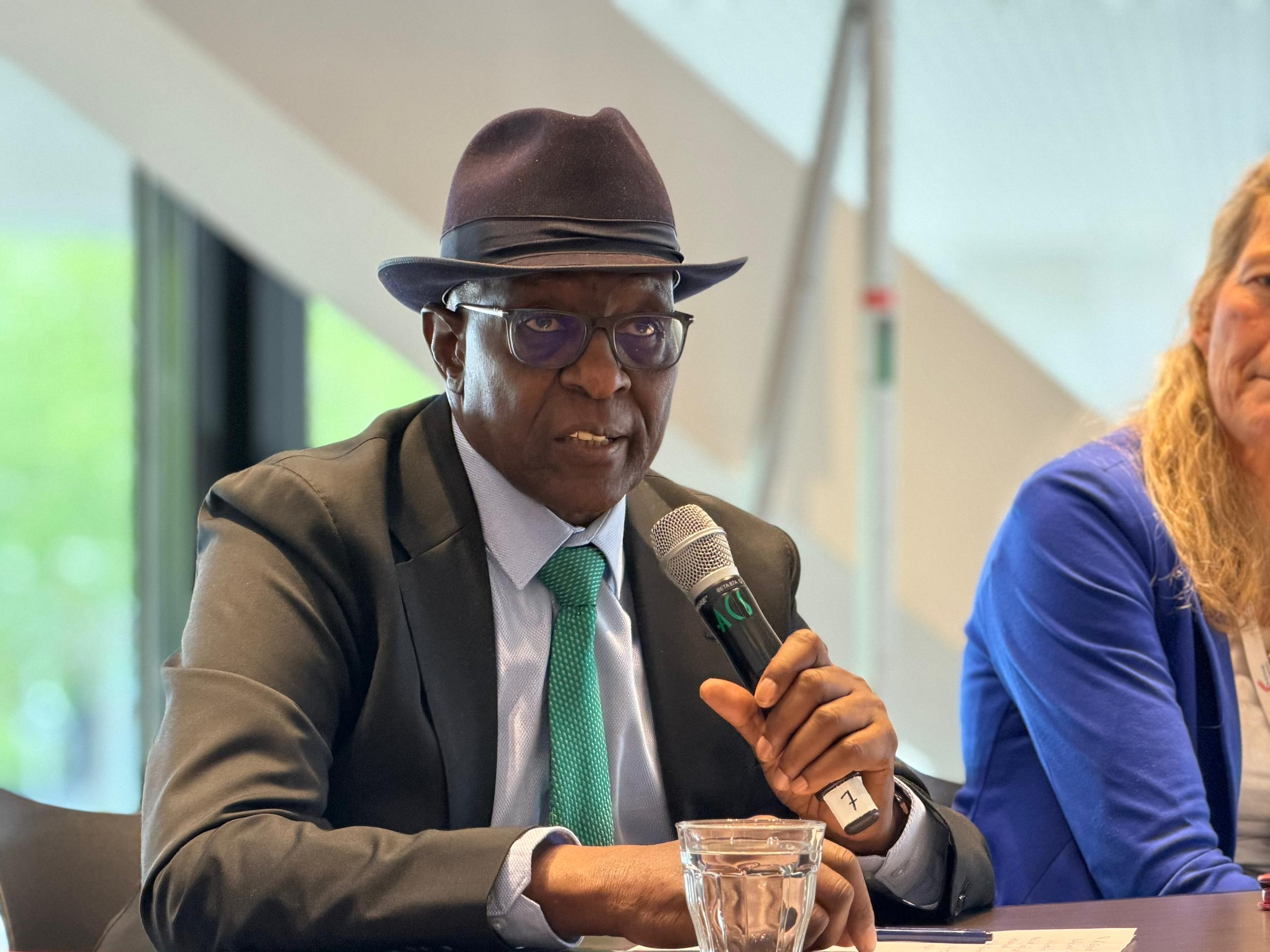
National Planning Commission director general Kaire Mbuende told Namibia Business Review this week that the policy and legislation were being developed concurrently to address the sector’s specific technical requirements.
“the legislation would still have to go through the required approval processes, including consideration by Parliament, and that the commission could not predict the exact date it would come into force,” he said.
The policy comes as Namibia seeks to mobilise more than N$980 billion for its green industrialisation ambitions, covering major infrastructure expansion, a large hydrogen plant and new manufacturing industries.
The investment blueprint includes about US$15 billion (N$274.9 billion) for railway and port infrastructure, including port facilities in Walvis Bay and a proposed new Angra port near Lüderitz. It also outlines a US$10 billion (N$183.2 billion) green hydrogen industrial plant near Lüderitz, alongside US$30 billion (N$549.7 billion) for green manufacturing, including electrolysis equipment, wind turbines, solar panels, a flat-glass factory, a lithium refinery and a lithium battery factory in Walvis Bay.
The plans also include synthetic fuels, including aviation fuel for export to Europe.
While the industry may require laws tailored to its unique characteristics, Mbuende said it was not operating without regulation.
Namibia already has an investment law that provides a framework for foreign investment across different sectors of the economy, offering investors certainty and confidence, he said.
Investment decisions also depend on political stability, a conducive business environment and incentives available to investors.
The legislative process comes as Namibia seeks to attract more than N$980 billion in investment to realise its green industrialisation ambitions.
“The investment requirement, estimated at more than N$980 billion, is not an amount that the Government is expected to finance alone,” Mbuende said.
He said the funding would have to come from private-sector capital, development finance institutions and other domestic and international sources.
“The government’s role is to establish the policy, regulatory framework and infrastructures that are necessary to attract and facilitate investments,” he said.
TAX CHANGES TO ATTRACT INVESTORS
The government is also adjusting its tax framework to attract investment in industries that require substantial upfront capital and may take years to generate revenue.
Under the Income Tax Amendment Act of 2024, companies operating in the mining, petroleum and green hydrogen sectors can carry forward assessed losses for up to 10 years, compared with five years for other taxpayers.
The law limits the annual set-off of assessed losses to the greater of N$1 million or 80% of taxable income, subject to applicable statutory provisions.
“The Government recognises that green hydrogen projects require substantial upfront capital investment and often have extended timelines before generating revenue,” Mbuende said.
The government is also drafting Special Economic Zone legislation that aims to introduce competitive corporate tax rates and targeted customs duty and value-added tax exemptions for eligible capital equipment used in green manufacturing and hydrogen production.
SHARED INFRASTRUCTURE TO CUT DUPLICATION
Namibia plans to use shared infrastructure to support green hydrogen and oil and gas development, reducing the need to build separate facilities for different industries.
Mbuende said the approach was included in the draft Green Industrialisation Policy, which proposes green corridors supported by common-user infrastructure to improve transport, energy and water logistics.
“Infrastructure sharing is not a new concept in Namibia. Our existing road, rail and port networks serve multiple sectors of the economy and will continue to support emerging industries, including green industrialisation and oil and gas,” he said.
He said some projects could still require dedicated facilities or additional infrastructure capacity, depending on their needs and approved activities.
The government is also working to integrate the core operations of the Namibia Green Hydrogen Programme into national budget and planning systems to reduce long-term dependence on donor funding.
CO-EXISTING
The government views green hydrogen and oil and gas as complementary sectors rather than competitors.
“Green hydrogen and oil and gas are not and should not be viewed as competing sectors, but as complementary components of a broader strategy to diversify the country’s energy mix, advance industrialisation, develop infrastructure, and promote economic growth,” Mbuende said.
He said the Sixth National Development Plan linked green hydrogen infrastructure with public investment in bulk water, transport corridors and the national electricity grid.
Namport and other government institutions are spearheading port expansion and railway upgrades intended to support both petroleum logistics and green ammonia exports.
EU SUPPORTS GREEN INDUSTRIALISATION
European Union Ambassador to Namibia Ana Beatriz Martins said the bloc remained committed to supporting Namibia’s green industrialisation.
She said HyIron, Cleanergy and Daures had completed their first-phase pilot facilities, demonstrating applications ranging from green iron production to green ammonia for maritime transport and fertilisers.
HyIron’s Oshivela plant has reached an initial production capacity of 15,000 tonnes of green iron a year. The company has also secured an offtake agreement with a European steelmaker for up to 200,000 tonnes of direct reduced iron annually, Martins said.
According to the Namibia Green Hydrogen Programme’s Mid-Year Review 2025, the sector has attracted more than N$2 billion in investment, created over 800 jobs and channeled about N$170 million to local small and medium-sized enterprises.
“To help sustain and expand these gains, the EU supports the development of the regulatory and legal framework, skills, and government and civil society capacities in Namibia’s renewable hydrogen sector,” Martins said.
She said EU-funded operations were subject to due diligence, contractual safeguards and ongoing monitoring. Projects financed by the European Investment Bank must also meet its environmental and social standards.
Martins said the EU could take action if there was evidence that its funds had been used improperly.
“The partnership supports sustainable industrial development, economic diversification, job creation and local value addition,” she said.
COMMENTS