
STAFF WRITER
Prime Minister Elijah Ngurare has called for tighter fiscal discipline, stronger accountability and a shift toward results-based budgeting, warning that the government must move from spending to measurable impact.
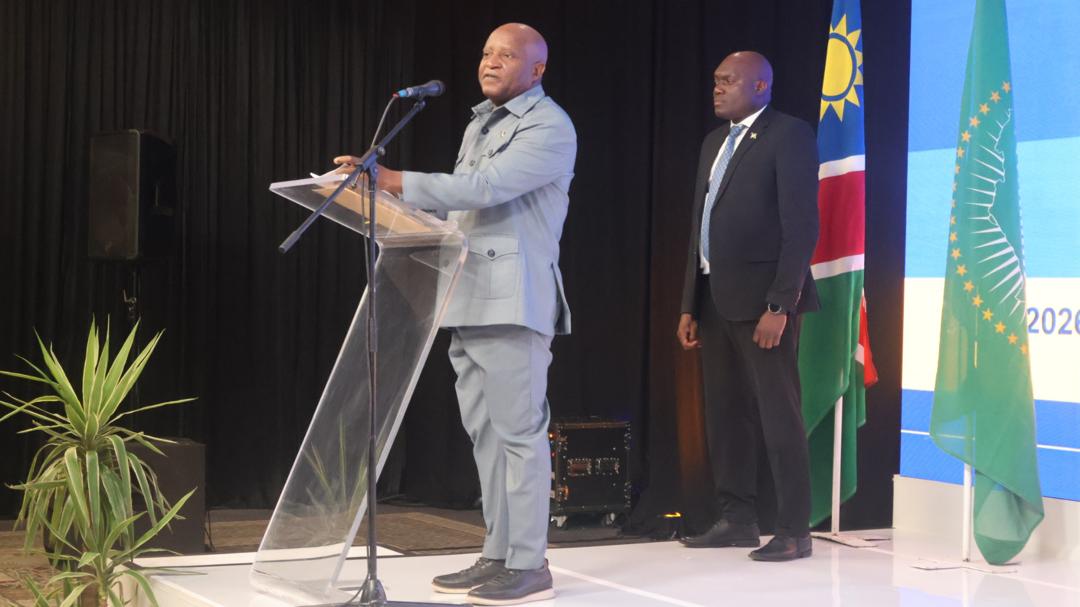
Ngurare made the remarks on Monday at the official opening of the 2026/27 Budget Reform Roll-Out Workshop at Windhoek Country Club and Resort.
He said the budget reform agenda reflects a commitment to serving Namibians effectively.
“The fact that we have gathered here today speaks volumes about how seriously we embrace the reform agenda laid out in the National Budget presented to Parliament on 26 February 2026,” he said.
He added that the budget theme was more than rhetoric.
“The budget’s theme — People, Productivity and Prudence — is not a slogan. It is a governing philosophy, which we must henceforth translate into standard operational procedure,” Ngurare said.
ECONOMY UNDER PRESSURE
Ngurare warned that Namibia’s fiscal environment has become more challenging due to global developments.
“The 2026/27 National Budget of N$87.9 billion… was tabled against a backdrop of recovering global conditions and a resilient domestic economy. Since then, however, the global environment has changed rapidly following the ongoing war in the Middle East,” he said.
He said the developments are already affecting inflation, trade and growth.
“For Namibia, this has three important implications: higher imported inflation through fuel and food prices; increased pressure on trade and the external position through higher shipping and import costs; and weaker growth prospects through softer external demand and tighter financial conditions,” Ngurare said.
He stressed that fiscal discipline is now essential.
“These developments reinforce the need for policy discipline, resilience and reform,” he said.
DEBT AND DEFICIT CONCERNS
Ngurare also pointed to rising debt levels and the need for tighter control of expenditure.
“At the time the budget was presented, the public debt was recorded at N$174.6 billion, representing 65.2 percent of GDP,” he said.
He said the government must meet its deficit reduction targets.
“The Government has committed to reducing the fiscal deficit from 5.5 per cent of GDP in 2026/27 to 3.3 per cent by 2028/29,” Ngurare said.
He added that the adjustment is not optional.
“This is not simply a technical adjustment in our fiscal tables; it is a strategic national imperative,” he said.
Ngurare warned that achieving fiscal targets would require strict spending control.
“The debt trajectory… requires N$2.3 billion in annual savings during the current MTEF period to come from expenditure restraint,” he said.
SHIFT TO OUTCOME-BASED BUDGETING
The Prime Minister said the government must move away from measuring spending and instead focus on results.
“For too long, public sector performance has been measured by what we spend rather than what we achieve,” he said.
He said success must be judged by outcomes.
“A hospital’s performance cannot be judged solely by its recurrent budget; it must be judged by patient outcomes. A school’s allocation is not its measure of success: the quality of learning is,” Ngurare said.
He said eight ministries will pilot outcome-based budgeting from 2026.
“This is why we are piloting Outcome-Based Budgeting in the following eight (8) selected OMAs… from the second quarter of 2026,” he said.
Ngurare said he will closely monitor the results.
“I will be paying close attention to those reports,” he said.
He also warned against diverting development funds.
“The virement of resources from development budgets to fund recurrent operational expenditure… must be brought to end,” he said.
“Capital investment is the engine of long-term growth.”
PUBLIC SERVICE EFFICIENCY
Ngurare said productivity in the public service must improve, especially given the size of the wage bill.
“The civil service wage bill remains one of the most significant drivers of our recurrent expenditure,” he said.
He said reforms in medical aid, procurement and digitalisation are necessary.
“These are structural necessities,” Ngurare said.
He called for a more efficient and modern public service.
“Namibia’s taxpayers deserve a public service that is lean, skilled, digitally enabled and relentlessly focused on service excellence,” he said.
INVESTMENT AND REFORMS
Ngurare said economic growth depends on private sector participation and regulatory reform.
“No government can spend its way to prosperity,” he said.
He urged ministries to speed up reforms.
“I encourage all relevant OMAs to fast-track the enabling bills and regulatory instruments that will signal to investors… that Namibia is open, credible and competitive,” he said.
CLOSING WARNING
Ngurare ended with a strong call for accountability in implementation.
“These will not be aspirational documents, but a signed commitment document from all Executive Directors,” he said.
He warned that the government would track performance closely.
“Our policy decisions must also be consistent in their implementation,” he said.
“To every delegate in this room: you have one day. Use it well. Namibia is watching, and Namibia deserves your very best,” he said.
COMMENTS