
STAFF WRITER
Namibia sees space science and technology as an opportunity to attract investment, create jobs and support economic development.
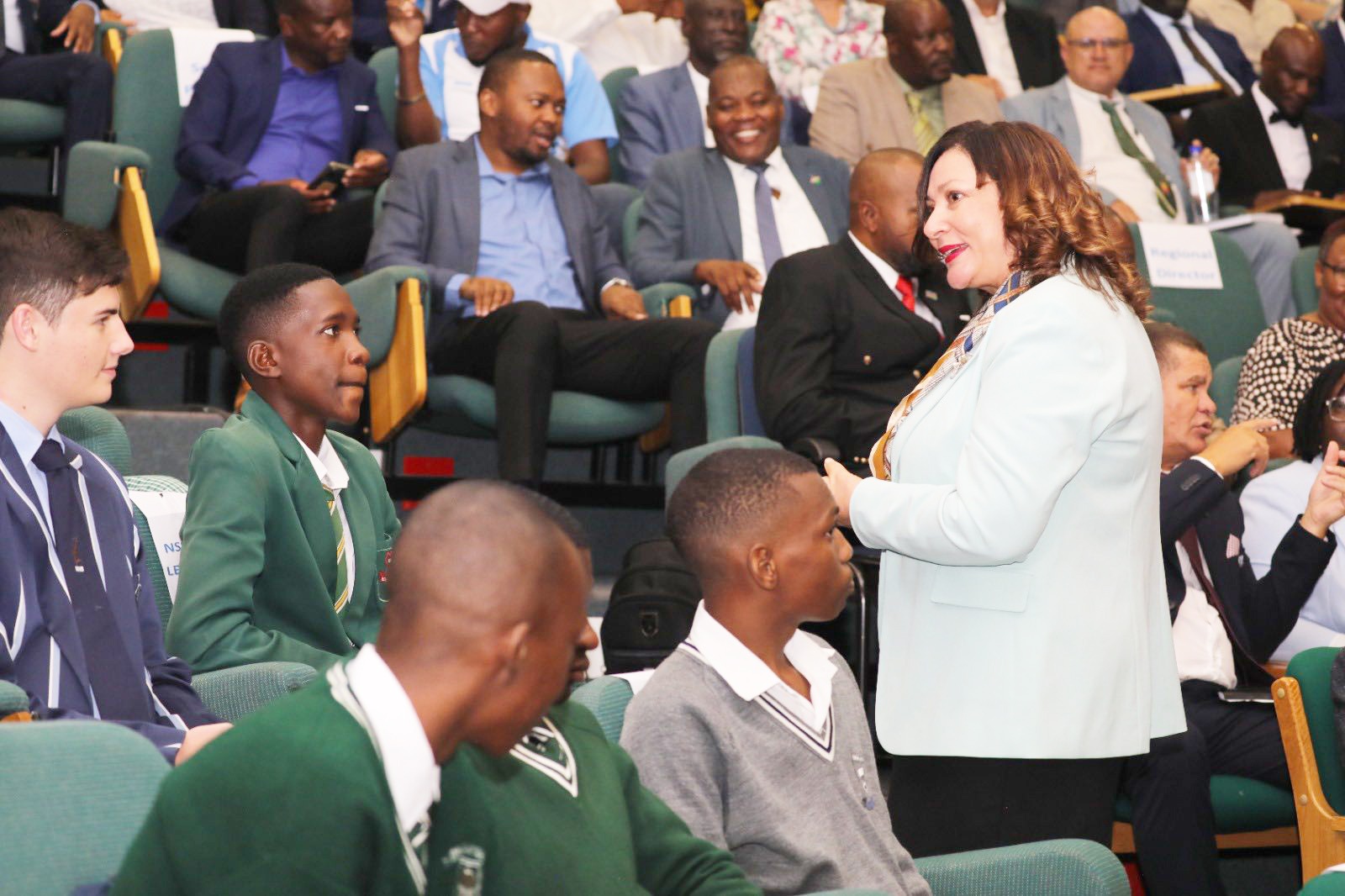
Deputy Executive Director for Higher Education, Training, Research and Innovation Dr Lisho Mundia said this on Monday, 5 October 2026, at the official opening of World Space Week Namibia 2026 at the Windhoek High School Stadium.
Speaking on behalf of Education Minister Sanet Steenkamp, Mundia said space science and technology was becoming an important area for research, innovation, education, entrepreneurship and national development.
“For Namibia, this presents an opportunity to build our capabilities and ensure that our people, particularly our young people, are prepared to participate in and benefit from the space economy,” he said.
Mundia said supporting space projects could attract investment and create opportunities for young people.
“By supporting exciting space projects, we can attract investments and build a strong future where space technology helps solve everyday problems right here in Namibia, for example improving farming, managing weather and creating fun new jobs for you, when you grow up,” he said.
Namibia adopted its first Space Science and Technology Policy in 2021, with the aim of using space resources to contribute to the country’s socio-economic growth and development.
In 2025, Cabinet directed the Ministry of Education, Innovation, Youth, Sports, Arts and Culture to develop a Space Science and Technology Bill.
Mundia said the proposed law would establish a legal and institutional framework for the development and regulation of space science and technology activities in Namibia.
“This will enable the country to effectively promote research, innovation, education, and capacity-building in the sector, while most importantly encouraging investment and participation that will create employment opportunities and contribute to economic development,” he said.
TRAINING OPPORTUNITIES
Mundia said young people interested in space science and technology have study opportunities at the University of Namibia (UNAM) and the Namibia University of Science and Technology (NUST).
At UNAM, he highlighted programmes in Physics and Astrophysics, Geoinformation and Earth Observation, and Engineering and the Built Environment.
NUST offers programmes in Geoinformation and Earth Observation, postgraduate diplomas in space technology and atmospheric science, as well as undergraduate engineering degrees.
Mundia also said Namibia had commissioned a Satellite Ground Data Receiving Station this year through collaboration with the People’s Republic of China.
“This strategic infrastructure will enhance Namibia’s capacity to receive and process satellite data for application across various sectors of Government and support evidence-based planning and decision-making,” he said.
He said the facility would also provide opportunities to expose and train graduates from space-related programmes through practical engagement.
CLEAR SKIES
Mundia said Namibia has a strategic advantage in astronomy because of its clear skies, low levels of light pollution and favourable atmospheric conditions.
“These characteristics have made Namibia an attractive destination for international institutions seeking opportunities to conduct astronomical research and invest in space science-related activities,” he said.
The World Space Week 2026 event is being held under the theme “Rocket Revolution”, focusing on the development of space technology from the early days of rockets to satellites, spacecraft and human spaceflight.
Mundia encouraged learners to take their education seriously, remain curious, think creatively and embrace innovation.
“While unemployment remains a challenge, science, technology and innovation offer significant opportunities for entrepreneurship, job creation and economic participation,” he said.
“Through your ideas, creativity and determination, you can become beneficiaries of these opportunities, and creators of solutions that contribute meaningfully to Namibia’s development.”
He also thanked European Space Agency astronaut Dr Matthias Maurer for visiting Namibia and engaging with learners during Space Week.
Mundia said Maurer’s engagement would contribute to efforts to promote Science, Technology, Engineering and Mathematics (STEM) education and inspire young people to pursue careers in space science and technology.
He concluded: “Space Science is the future and that future begins with you!”
COMMENTS