
VERIPUAMI KANGUMINE
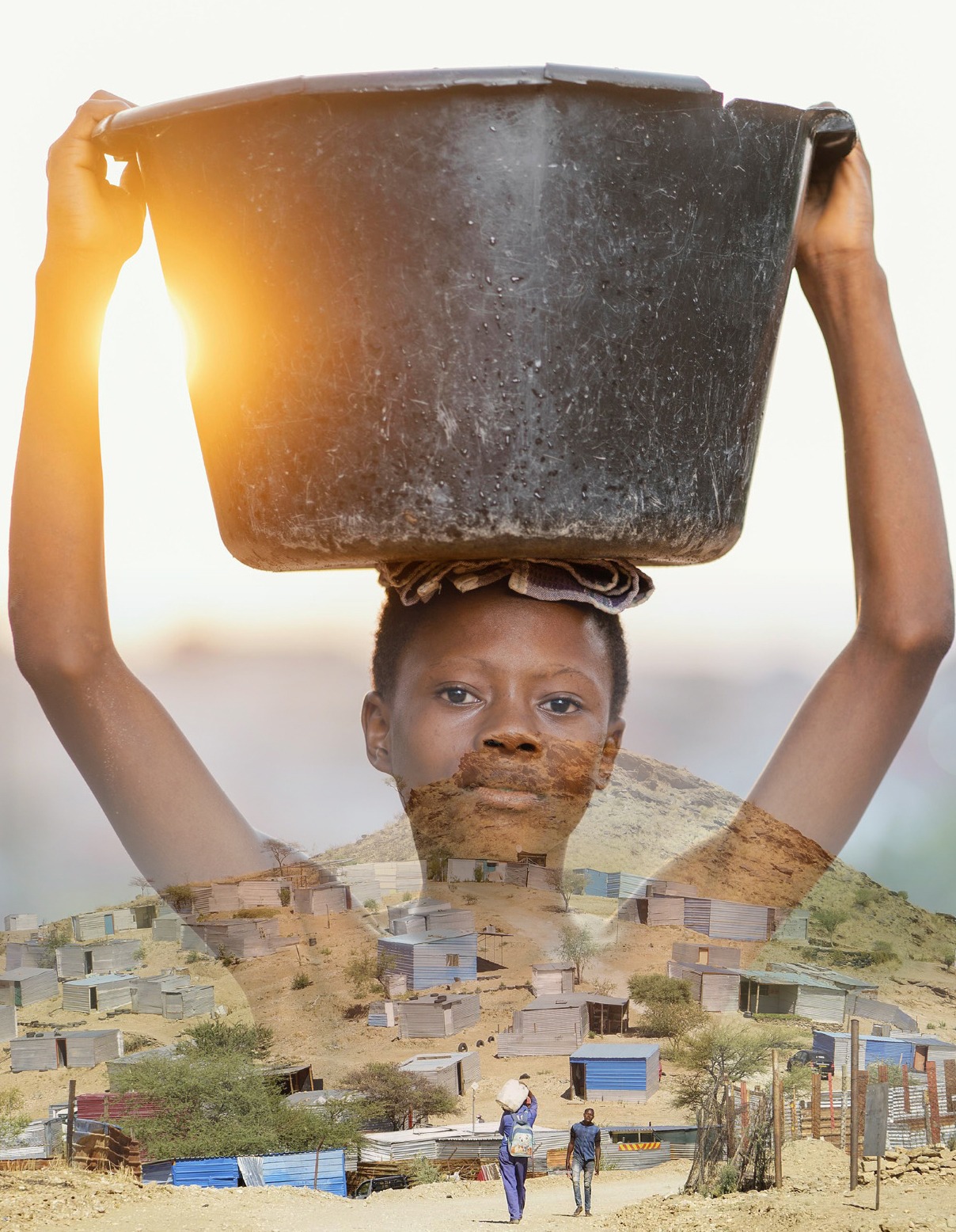
In Havana, Katutura, water is measured in footsteps, three kilometres to go there, three kilometres to come back, often carrying buckets.
In government offices, it is measured in allowances: N$55 560 a year for water and electricity for ministers and top officials. This money is not paid by them personally, but comes from the government, meaning that ordinary Namibians pay for it through taxes.
This contrast came into sharper focus last week when President Netumbo Nandi-Ndaitwah approved a new salary structure for Public Office Bearers, confirming the N$55 560 annual water and electricity allowance for ministers and senior officials, funded by taxpayers.
The same structure applies to the President, Vice President, ministers, governors, chairpersons of regional councils, management committees, members of parliament and special ministerial advisors, according to a government gazette.
The adjustments are effective from 1 April 2026.
Between these two realities sits a growing conversation about who pays, who benefits, and who waits.
While the structure outlines what will be covered for public office bearers, life in informal settlements like Havana in Windhoek tells a different story.
One of those affected is Julitha Fillepus (22), a third-year student at the International University of Management (IUM), who says she walks about three kilometres to fetch water.
She is among many residents in informal settlements who live without reliable access to water and electricity.
“I have to walk three kilometres to get water,” she said.
Under the new structure, taxpayers will also pay N$48 240 annually for water and electricity for deputy ministers.
The same arrangement sees N$55 560 allocated annually for ministers, the Director of Intelligence Service, Attorney General, Director General of the National Planning Commission, as well as the President and Vice President.
The Prime Minister will receive a N$351 175 housing allowance, bringing the total package to N$1.6 million annually.
The Deputy Prime Minister’s housing allowance is set at N$289 957 annually, pushing the total package to N$1.3 million.
Ministers will receive a N$273 311 housing allowance and a N$1 440 telephone allowance, taking their annual package to N$1.3 million.
The structure also includes taxpayer-funded cellphone allowances: N$1 260 for the Auditor General, N$1 440 for the Director General of the National Planning Commission, N$1 080 for deputy ministers, and N$864 for the Chairperson of the National Council, including members and senior party officials.
DISAPPOINTMENT IN HAVANA
For Fillepus, daily life in Havana comes with constant trade-offs.
She told Namibia Business Review on Saturday that she often stays after hours at the International University of Management to complete assignments because of a lack of electricity and internet connectivity at home.
“I have resorted to using the electricity at IUM to charge my phone, type my assignment and study because we don’t have electricity here in Havana,” she said.
To survive, she sells candy, cookies, eggs and bread to pay N$300 monthly rent for her shack.
She also spends about N$200 a month on a d.light solar device, which she tops up weekly with N$50 for lighting at night.
A d.light is a solar-powered system used by low-income households.
Other residents in Havana say they are frustrated by the contrast between their daily struggles and government spending on utilities for public office bearers.
“How can the president issue something like that when we have been living here for over twenty years without electricity or water?” asked Kakuhire Hei, who sells clothing merchandise from South Africa.
“Even I pay taxes when I order my clothes from South Africa and you are telling me that those politicians who already have money will be paid from our taxes,” she said.
Hei called on government to redirect funds to water, electricity and sanitation in informal settlements.
Another resident, Rivaldo Gawaseb, said the decision feels unfair to those living at informal locations.
“President Netumbo you are choking us, you are holding us by the neck… you said we were too few to be poor what happened,” he said.
Mona-lisa Rokero, a mother of three, said the lack of basic services forces her to buy food in small quantities because she does not have a refrigerator.
“There the president is wrong, we are the ones who have voted them into office yet they have left us with nothing,” she said.
She called for investment in sanitation, roads and water supply.
“We already pay N$10 per litre of water and I bought our solar power for N$5 000. Bring the water money to develop our services here and roads and we will pay,” she said.
POLICY CONTRADICTION?
The decision comes despite President Nandi-Ndaitwah previously advocating for cost-cutting measures, including reducing cabinet portfolios to 14.
It also comes at a time when Namibia faces high unemployment of 36.9% and youth unemployment of 44.4%, according to the Namibia Statistics Agency’s 2025 figures.
The country has a housing backlog of about 300 000 units, with nearly 42% of the population living in informal settlements.
The World Food Programme has projected that about 612 000 people are experiencing high levels of acute food insecurity.
“WRONG PRIORITIES”
Social justice activist Shaun Gariseb said government is prioritising benefits for public office bearers while civil servants continue to struggle with salaries.
“The government vehemently refused to give a decent living salary increment to civil servants… yet they increased their medical aid contribution to 100% only to add and increase the perks of Public Office Bearers tremendously,” he said.
He said the benefits create a growing gap between leaders and ordinary workers.
Gariseb also questioned whether proper economic assessment was done before the decision.
ELITES OVER THE POOR
Unionist Mahongora Kavihuha said the decision shows government priorities are misplaced.
“The government is more interested in the elite rather than the masses,” he said.
He added that the state has enough resources to improve basic services but chooses not to.
Political analyst Dumba Kamwanya said the decision reflects a gap between leadership and ordinary citizens.
“While public office bearers are guaranteed over N$55 000 a year for electricity and water, many Namibians in rural areas and places like Katutura still struggle without reliable access to these same basic services,” he said.
He warned that such decisions deepen inequality and weaken public trust.
“When the state subsidises these costs for those in power, while others go without, it risks deepening inequality and eroding public trust,” he said.
WHERE ARE THE PROMISES
Basic Income Grant Coalition of Namibia representative Riaani Musutua questioned why funds are available for officials but not for pension increases.
“We were also told that there was not enough money to increase the old-age pension to N$6 000 as promised during the 2024 elections. Yet, resources are somehow available when it comes to supporting the wealthy,” she said.
She called for a universal basic income grant of N$600 per person monthly for citizens aged 0 to 59.
Musutua also referenced the Swapo Party’s 1989 manifesto, saying it promised redistribution of resources to ensure dignity for all Namibians.
“But what has happened to that promise?” she asked.
COMMENTS