
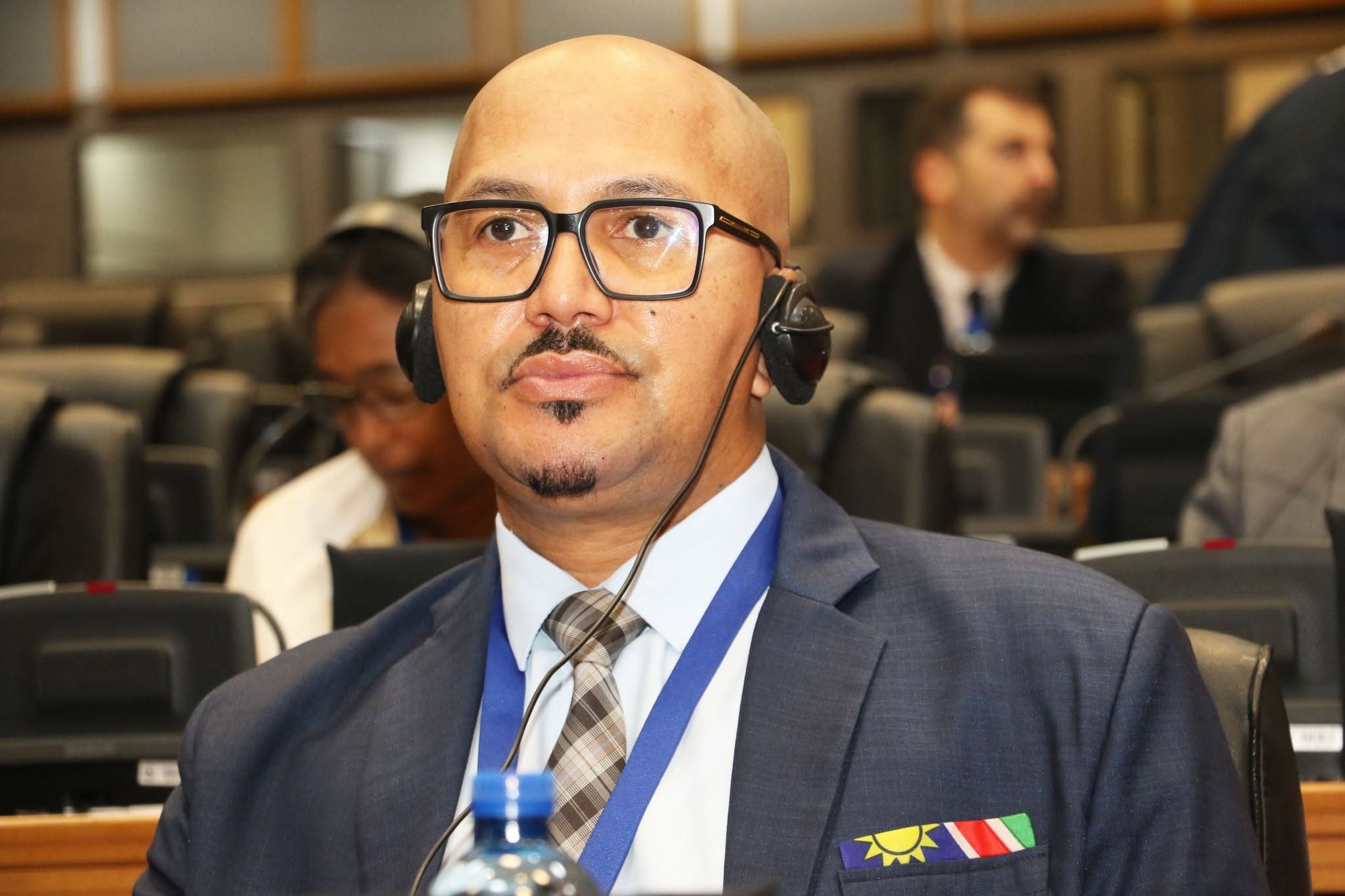
Rodney Cloete
Some reports this week said Parliament had “approved” the Petroleum Amendment Bill. It has not. On Tuesday 20 October the Bill passed its second reading. That is one step on a longer road, and every Namibian should know what the road looks like.
The rules come first
Before the National Assembly makes any law, it works under its Standing Rules, Orders and Internal Arrangements, which are public on parliament.na. The Rules set who may speak, for how long, how amendments are moved and how votes are taken. The House may set a Rule aside only by a 75 per cent majority of all voting Members. The Rules belong to the whole House, not to whichever side has the numbers on the day.
In my view, every Parliament should decide its own rules. That did not happen this time. The current Standing Rules were adopted on 9 July 2024 by the outgoing Seventh Parliament, eight months before the Eighth Parliament was sworn in on 20 March 2025. SWAPO weaponised the rules before the new House could have its say, and today the House is struggling to function. The Speaker keeps saying the Standing Rules have to be addressed, yet that has not been done, because the rules as they stand benefit SWAPO. The cost is deadlock, because consensus cannot be reached.
How a Bill becomes law
A Bill is tabled and read a first time, without debate. At second reading the House debates its principle. A yes vote agrees the idea, not the wording.
Under Standing Rule 181(1), the Bill then “stands referred to the Committee of the Whole House”. Any Member may move an amendment on the floor without lodging it in advance. An amendment may not contradict the principle agreed at second reading, but it may add safeguards.
How third reading must happen
In Committee the clauses are taken in sequence and the Title comes last (Standing Rule 182(4)). The Chairperson of the Whole House must then report the Bill to the House “with or without amendments” (Standing Rule 189(1)).
If the Bill was amended, “a day must be appointed” for its third reading (Standing Rule 189(4)(a)). Only a Bill reported without amendments “may proceed to its third reading immediately” (Standing Rule 189(5)).
Third reading is a separate stage. The Speaker puts the question “That the Bill be now read a third time”, or “as amended” where it was changed (Standing Rule 190(1) and (2)). Only when the House agrees is the Bill passed (Standing Rule 190(5)).
That question belongs to the Speaker, not to the Chairperson in Committee. In my view, the order is set by the rules, not by whoever is in the Chair. Third reading cannot be folded into Committee, and an amended Bill cannot skip its appointed day.
Where the Petroleum Bill stands
The second reading of the Petroleum Amendment Bill (B.12) was carried on Tuesday 20 October. Most of the opposition walked out in protest. Of the opposition parties, only NEFF stayed and voted with SWAPO, supporting the ruling party. The UDF, which usually also votes with SWAPO, was absent that day. Committee Stage began on Wednesday 21 October.
The Bill is not law. It has had no third reading, the National Council has not reviewed it, the President has not signed it, and it has not been published in the Government Gazette.
What the Bill does
The Bill moves power over Namibia’s oil from the Minister of Industries, Mines and Energy to the President. Three clauses deserve a close reading.
Clause 3 allows the President to delegate the power to grant royalty relief to the Vice-President, the Prime Minister, a Minister or the Director-General. The Bill does not require that delegation to be published.
Clause 4 creates a Director-General of a new Upstream Petroleum Unit, who grants oil licences. The office has no fixed term. The Director-General declares his or her interests to the President alone, and no register of those interests is published.
Clause 9 gives the President the decision on royalty relief, after consulting the Minister of Finance. That advice does not have to be published. Royalty relief is money the State gives up, so Namibians have an obvious interest in knowing who decides, and on what advice.
This matters for oversight. A minister answers questions in the House. The President rarely does. When power moves from a ministry to State House, Members have fewer chances to ask about it, so the law itself has to carry more of the openness.
What the safeguards do
In Committee, the opposition is putting plain safeguards on the record. None of them takes any power away from the President. They let Namibians see how that power is used.
The oil belongs to the people of Namibia. So does their Parliament.
Rodney Cloete is a Member of the National Assembly for the Independent Patriots for Change (IPC) and the IPC’s Shadow Minister of International Relations and Trade.
COMMENTS