
Tiri Masawi
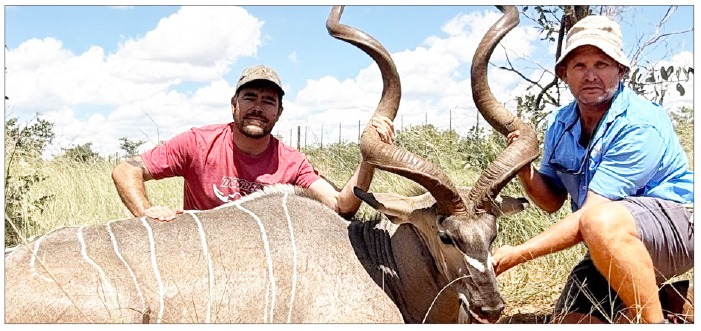
Namibia marked 36 years of independence last weekend, but its lucrative hunting industry remains deeply divided, with black hunters still struggling to access opportunities while their white counterparts dominate the field.
The divide is reflected in the country’s two main hunting bodies — the Namibia Professional Hunting Association (NAPHA), largely dominated by previously advantaged white members, and the Namibia Association of Trophy Hunting Operators (NATHO), which represents many previously disadvantaged black hunters.
WHO GETS THE SHOT?
Black hunters under NATHO say they continue to be sidelined from meaningful participation in the industry.
NATHO chairperson Corrie Mensah told Namibia Business Review last week that the sector remains racially divided, despite more than three decades of independence.
Mensah said efforts have been made to empower members and collaborate with NAPHA, but opportunities remain scarce.
“Obviously this might come out as a sensitive issue, but it is something that we need to tackle and find ways of dealing with,” he said.
Even when Namibia Tourism Board (NTB) organises joint trips to tackle the problem. Mensah says inequalities still persist during these engagements.
“We have gone for a few trips outside the country, including our counterparts at NAPHA. But while we are at these exhibitions, we are told we are not allowed to give out our business cards or canvass for business like our counterparts at NAPHA, as we are not recognised,” he said.
Mensah cited a specific example.
“A good example is a trip we went on to Dallas in the United States a few years back. While we were both hosted by the NTB, we were not allowed to engage clients. This never made sense to me because others in the same tent were doing the same,” he said.
He added that even those who manage to enter the industry face structural barriers.
“Even if most of the black hunters or potential hunters are trained and given all the knowledge, they still do not have anywhere to build these businesses because they do not have farms. One needs a good game farm to venture into this business,” he said.
Mensah said land access remains a key issue that the government needs to address.
“It is something that we have always asked from the government — that they also need to consider game farms when dealing with land distribution,” he said.
He added that legal requirements further disadvantage black hunters.
“In some cases, even if one has a farm and the resources, we are still required by law to work with professional hunters,” he said.
Mensah said it’s difficult to conduct business in this current setting.
“Imagine if I get a foreign client that wants to come and hunt, for example a leopard. I still cannot execute the hunt myself. I must go to colleagues who have always been privileged to execute the hunt at my farm because there are not many professional black hunters in the country.”
He added “at the end of the day, most of our members are left with nothing, as they have to pay all the earnings to the professional hunters,” he said.
BIG MONEY, UNEVEN SHARE
According to figures released last month by environment, forestry and tourism minister Indileni Daniel, Namibia generated about N$292.5 million from trophy hunting between 2013 and 2024.
Daniel said the industry has provided significant income to communal conservancies.
“From 2013 to 2024, communal conservancies earned about N$166 million through joint venture tourism, while hunting earned about N$292 million,” she said.
This means trophy hunting generated N$166.3 million more than joint venture tourism over the same period.
Daniel said conservation hunting is part of Namibia’s broader sustainable development strategy. She explained that it involves selective, high-value hunts where international clients pay to hunt older animals.
The practice is strictly regulated through permits, trained professional hunters and scientific quotas.
According to Daniel, hunting removes less than 1% of Namibia’s wildlife population annually, while most species grow by 25% to 35% each year. For slower-breeding species like elephants, the offtake is just 0.2%.
BRIDGING THE DIVIDE?
NAPHA president Hannes du Plessis acknowledged the concerns but said efforts are underway to unify the sector.
“What is more important is that when we are out there marketing our products and Namibia, we must market Namibia as one,” he said.
He added “we need to be robust on this and realise that our neighbours: Zambia, Botswana, Zimbabwe and South Africa are going out of their way to market themselves as one. We need to realise that everyone wants what we have.”
On allegations that some hunters were prevented from marketing themselves, du Plessis said he was unaware of such incidents.
“In instances where colleagues were stopped from giving out business cards, it is something that I am not aware of. We are working to train all Namibians interested in this because capacity is important,” he said.
POLICY VERSUS REALITY
Environment, forestry and tourism ministry spokesperson Vilho Hangula said the industry is governed by law and should benefit all Namibians.
“The hunting industry in Namibia is governed by the Nature Conservation Ordinance of 1975 and makes provision for hunting of specific wildlife for conservation purposes and rural economic development,” he said.
He said all people, including the previously disadvantaged, can participate in the industry provided they are registered, licensed with all required permits and adhere to all outlined rules and regulations.
Hangula acknowledged that barriers to entry exist but said organisation within the sector could help.
“Entry in any industry is always a challenge. One way to address this problem is through proper organisation, such as forming hunting associations and support groups to foster rapport with experienced professionals,” he said.
He added “the ministry proffers its ironclad resolve to develop the Namibian hunting industry further and promote socio-economic development for all Namibians.”
NTB Spokesperson Flora Quest said they continue to create platforms that promote participation of previously disadvantaged Namibians across the tourism value chain.
“Through trade shows, stakeholder engagements, and capacity-building initiatives, we actively encourage broader representation and visibility.
“Regarding concerns about canvassing for business during NTB-organised marketing activities, it is important to note that such platforms are often structured to promote Namibia as a destination collectively, rather than individual businesses exclusively. However, participants are encouraged to network, build relationships, and position their services within agreed guidelines. NTB remains open to engaging stakeholders to refine these approaches to ensure equitable benefit while maintaining the integrity and objectives of national marketing efforts,”Quest said.
She said inclusivity in hunting industry is critical for sustainable tourism development and national economic growth.
“ Broad-based participation enhances social equity, strengthens industry resilience, and ensures that tourism benefits are shared more widely among Namibians. It also contributes to a more authentic and representative national tourism offering,” She said.
She said NTB supports previously disadvantaged participants through various initiatives, including subsidised participation in trade fairs participation at regional and international fairs, B2B networking engagement with international travel agencies, training and capacity development programmes, and collaborative partnerships (Ethiopian Airlines and FNB) aimed at industry growth.
“We remain committed to working with all stakeholders to advance an inclusive and competitive tourism sector,” she said.
WHERE THE MONEY ROARS
Despite the tensions, the sector continues to generate significant revenue.
Last month, Namibia set new benchmarks in the wildlife auction market when a hybrid game auction in Windhoek shattered previous records.
A kudu bull from the Gobabis area, with a horn size of 68 inches, sold for a record N$4.5 million. An oryx followed at N$3.1 million.
“I got N$4.5 million… here is the hammer… are we sure… all through, N$4.5 million done,” auctioneer Brandon Leer said as the sale closed to applause.
Leer described the event as “very exciting and just great all round.”
The auction, hosted by Blaauwberg Auctioneers with online bidding facilitated by Meerkat, featured 74 lots including white rhino, waterbuck, zebra, springbok, sable and kudu.
“If I am not mistaken, this was probably the second-highest turnover of a game auction in this country,” Leer said.
“I think we raised just over N$26 million for 74 lots of animals, which is quite spectacular.”
He added that the auction has become “an elite auction,” focusing on animals with high-quality genetics and pedigrees, rewarding breeders who invest in premium wildlife.
COMMENTS