
Imelda Ambondo
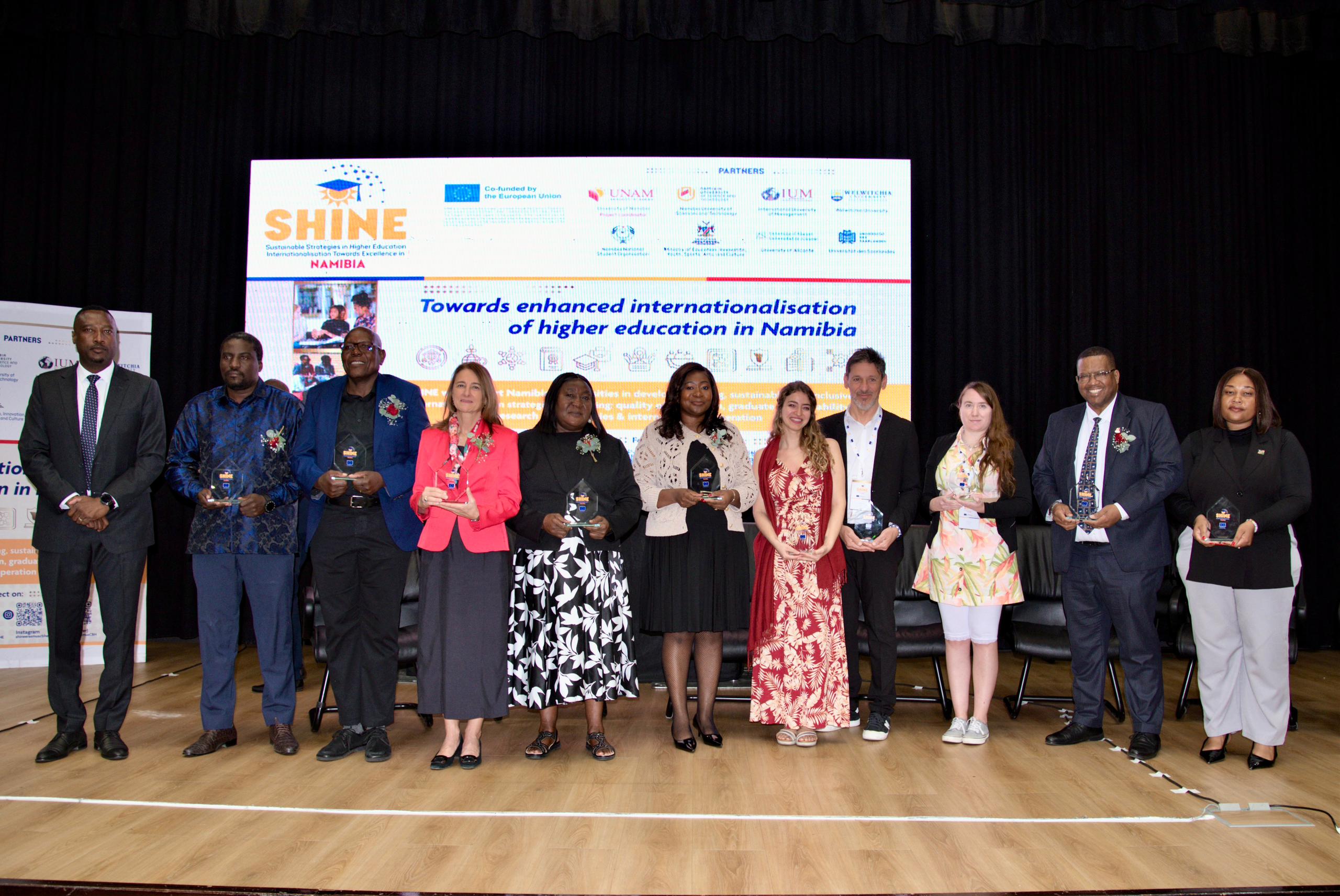
Minister of Education, Innovation, Youth, Sports, Arts and Culture, Sanet Steenkamp launched the Sustainable Strategies in Higher Education Internationalisation Towards Excellence in Namibia (SHINE) project which aims to achieve an enrolment of at least five percent enrolment at the country’s tertiary institutions.
The five percent threshold for international student enrolment at tertiary institutions is part of the Southern African Development Community protocol on education .
Speaking at the launch Steenkamp, said the project is a key move towards improving both the academic and economic future of the country.
Currently, international students make up only about 3% of Namibia’s total higher education enrolment. However, the government does not see this as a weakness.
The minister said SHINE is a direct, operational response to our regional and continental obligations and Namibia is contributing towards fulfilling the SADC Protocol on Education and Training.
Steenkamp said SHINE treats SADC region as a “talent pool”, where member states are encouraged to reserve at least 5% of admissions for students from the regional bloc as well as gradual relaxation of immigration formalities for students and researchers for academic pursuits.
“Furthermore, we are anchoring this project in the African Union’s Agenda 2063. We are participating in the “Education and Skills Revolution” required to build the Africa We Want. By strengthening our internationalisation frameworks, we are ensuring that Namibian graduates are not just locally employable, but globally mobile and continentally relevant. We are moving away from being mere consumers of global knowledge to becoming influential co- creators on the world stage,” she said.
The project brings together local universities with international partners from Europe, including institutions in Spain and Germany, with funding support from the European Union.
Steenkamp said SHINE project is not just about education, but about positioning Namibia in a fast-changing global economy.
“In a global economy driven by the Fourth Industrial Revolution, knowledge is our most valuable currency. For Namibia to thrive, our higher education system must move from the periphery of global discourse to its very centre.” She said
A key part of the SHINE project is ensuring that even students who never study abroad still benefit from global standards through what the minister called “internationalisation at home.
“We are ensuring that the 97 percent of our students who may never leave our borders still receive a globally-benchmarked education,” she said.
She added that this must reach all campuses, from Windhoek to more remote areas like Katima Mulilo, Nkurenkuru and Lüderitz.
“The SHINE project is expected to be the precursor to a formal National Internationalisation of Higher Education Strategy or Roadmap. We want to build a permanent legacy, not a three-year project,” she said.
The minister welcomed the involvement of the Namibia National Students Organisation (NANSO), saying it ensures that students have a voice in shaping the future of higher education.
“Internationalisation is not about a simple movement of people; it is about the integration of a global dimension into the very soul of our institutions. We must transform Namibia into a “Global Academic Destination”, a hub where the world comes to learn about sustainable initiatives, conservation, governance, etc. Our goal is Reciprocal Internationalisation so that while we are adopting global standards, we are also sharing Namibian indigenous knowledge and research excellence with the world,” she said.
Speaking at the launch European Union Ambassador to Namibia Ana Beatriz Martis said the SHINE Project brings together institutions from Namibia and Europe in a shared effort to enhance academic collaboration, build expertise, and support the development of skills that are essential in today’s rapidly evolving world.
“By strengthening networks between universities and encouraging innovation in teaching and research, this project will contribute to the long-term development of Namibia’s higher education sector,” she said.
She added that youth and students are at the heart of initiatives like this. Erasmus+ is more than a programme; it is a platform for opportunity. It enables students and academics to exchange ideas, experience new perspectives, and build lasting partnerships that extend far beyond the classroom.”
Beatriz Martins said these exchanges help prepare the next generation of leaders to address the global challenges – from climate change and digital transformation to sustainable development and inclusive growth.
“ Through the Global Gateway Africa-Europe Investment Package, Namibia also benefits from other EU funded initiatives such as Horizon Europe, the Intra-African Academic Mobility Scheme and the ARISE Programme, which together provide a wide range of opportunities supporting universities,” she said.
COMMENTS