
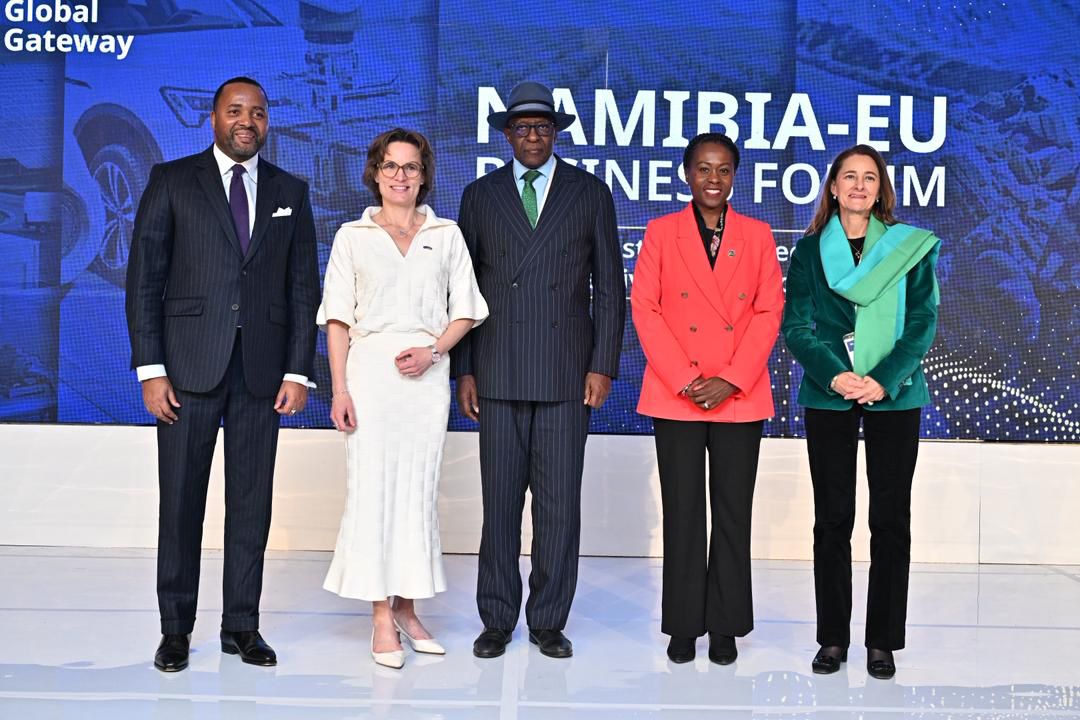
Namibia is betting on green hydrogen and other renewable energy sources to drive its energy transition and industrial development. However, securing buyers for green hydrogen remains a challenge, while questions persist about the industry’s commercial viability, investment risks and regulatory framework. Namibia Business Review (NBR) Editor Tiri Masawi spoke to European Union Ambassador Ana Beatriz Martins (ABM) about the EU’s investment in Namibia’s green hydrogen ambitions, the safeguards governing its support and the risks facing the sector.
NBR: Senior officials within the Namibia Green Hydrogen Programme (NGH2P) recently acknowledged that private investment is stagnating due to a lack of long-term international offtake agreements, making projects difficult to finance. How does the EU justify investing millions in capacity-building grants when Namibia still lacks a formal legal framework to secure these investments?
ABM: In green industrialisation, Namibia has moved beyond announcements and strategies.
Renewable hydrogen projects such as HyIron, Cleanergy and Daures have all completed their first-phase pilot facilities, demonstrating different applications of green hydrogen, from green iron production to green ammonia for maritime transport and fertilisers.
HyIron, in particular, is already moving towards commercial-scale production, with its Oshivela plant reaching an initial production capacity of 15,000 tonnes of green iron per year and securing an offtake agreement with a European steelmaker for up to 200,000 tonnes of direct reduced iron per year.
The renewable hydrogen sector in Namibia has already attracted more than N$2 billion (around €100 million) in investment, created more than 800 jobs and channelled around N$170 million to local small and medium-sized enterprises (SMEs), according to the Namibia Green Hydrogen Programme’s Mid-Year Review 2025.
To help sustain and expand these gains, the EU supports the development of the regulatory and legal framework, skills, and government and civil society capacities in Namibia’s renewable hydrogen sector.
The EU’s support is based on the sector’s long-term potential to promote sustainable industrial development, economic diversification, local value addition and job creation beyond individual projects.
NBR: Civil society groups and legal watchdogs in Namibia have repeatedly warned that green hydrogen concessions are progressing without a complete legal framework for local environmental protection and formalised community consultation requirements. How is the EU ensuring that European taxpayers and development finance institutions are not exposed to serious reputational and legal risks by supporting projects that lack a fully developed domestic regulatory framework?
ABM: Namibia has an existing Environmental Management Act and Environmental Impact Assessment Regulations, which provide for environmental clearance and public participation.
Projects supported under the Global Gateway are identified and assessed against agreed policy objectives, applicable legal and financial rules, and relevant environmental and social standards. EU support does not replace the permits, assessments or consultation processes required for individual projects.
EU-funded operations are subject to due diligence, contractual safeguards and ongoing monitoring. Projects financed by the European Investment Bank (EIB) must also meet the Bank’s environmental and social standards, including stakeholder engagement requirements. These processes help verify eligibility, assess viability and ensure alignment with EU policies and the EIB’s Environmental and Social Sustainability Framework.
NBR: German energy company RWE, previously identified as the anchor offtaker for Hyphen Hydrogen Energy, withdrew from its commitment amid weak domestic demand and high capital costs in Europe. Potential European developers have also expressed frustration over uncertainty surrounding Namibia’s domestic tax regime. To what extent is the EU actively auditing or intervening in Namibia’s slow-moving fiscal policy development, and are you concerned that European capital could permanently shift to markets with more established legal frameworks?
ABM: Globally, the renewable hydrogen sector has been scaling up more slowly than initially anticipated.
Nevertheless, in Namibia, HyIron, Zhero, Cleanergy and Daures continue to advance, reflecting sustained European interest. European companies also continue to explore further investment opportunities in the sector.
The EU supports the development of a predictable regulatory and investment environment through technical cooperation and policy dialogue.
The EU continues to regard Namibia as a strategically important long-term partner while maintaining a prudent and ongoing assessment of risks and delivery prospects.
NBR: How will the EU prevent taxpayer-funded port, rail and road upgrades at Lüderitz and Walvis Bay from indirectly subsidising and accelerating Namibia’s growing oil and gas logistics industry?
ABM: EU support in Namibia is not directed towards fossil fuels or fossil fuel infrastructure. Any EU-supported intervention has a clearly defined scope, and support for infrastructure dedicated to fossil fuels, including oil and gas development, is excluded.
Projects supported under the Global Gateway are identified and assessed against agreed policy objectives, applicable legal and financial rules, and relevant environmental and social standards. EU funding is committed to clearly defined purposes and is subject to oversight to ensure compliance.
EU-funded infrastructure projects are subject to due diligence, prior assessments and contractual safeguards. These include regular reporting by implementing partners, verification mechanisms, results-oriented monitoring and, where relevant, external evaluations.
If there is evidence of the inappropriate use of EU funds, the EU can take the necessary measures to safeguard their proper use.
NBR: What is the EU’s official position if European Global Gateway funding becomes deeply entangled with, or structurally dependent on, a state apparatus funded primarily by fossil fuel revenues?
ABM: EU engagement with Namibia is centred on the Strategic Partnership on Sustainable Raw Materials Value Chains and Renewable Hydrogen. The partnership supports sustainable industrial development, economic diversification, job creation and local value addition.
The EU does not provide support to Namibia’s oil and gas sector. Any proposed EU-supported investment is assessed against agreed policy objectives, applicable legal and financial rules, and relevant environmental and social standards.
Namibia’s decisions concerning future oil revenues do not remove these conditions governing EU funding. The European Commission continuously assesses the risks and strategic rationale of its support.
COMMENTS