
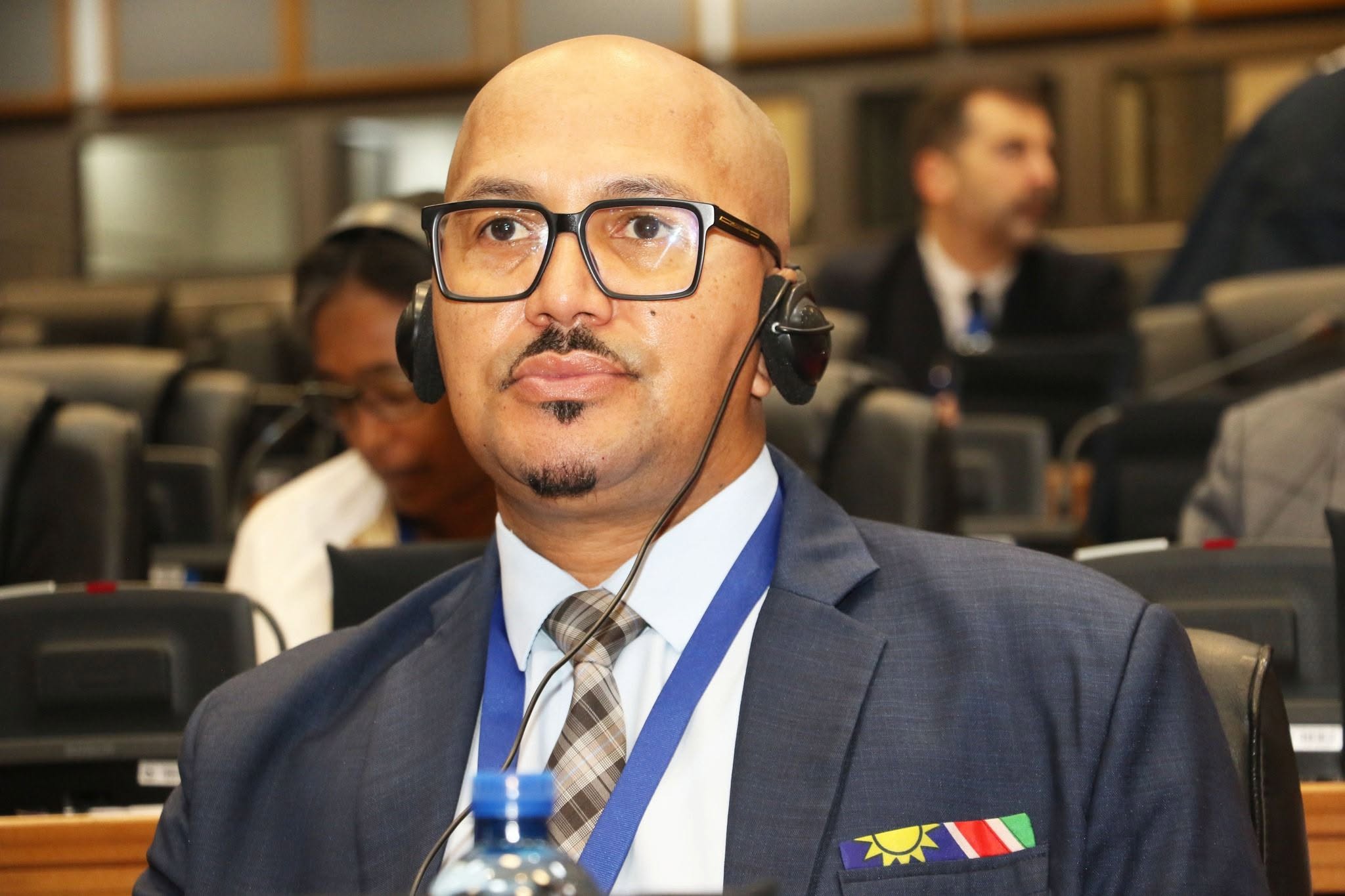
Rodney Cloete
In 2025, Namibia exported nearly N$59 worth of goods to the United States for every dollar exported to Russia. That comparison does not tell us whom to befriend. It does tell us that economic diplomacy needs a firmer footing than liberation memory.
In 1945, Albert Hirschman published National Power and the Structure of Foreign Trade. His warning was that unequal dependence on trade can become political power. A country that cannot easily replace a buyer or supplier has less room to manoeuvre. Eighty-one years later, that warning deserves a place on Namibia’s foreign-policy desk.
The Institute for Public Policy Research’s Quarterly Economic Review, published on 5 October 2026, examines our economic relationships with Russia and the United States. Its figures raise a question: are we judging partnerships by what they deliver to Namibians, or by the warmth of their political history?
According to the review’s tables, Namibia exported N$3.845 billion in goods to the United States in 2025, compared with N$65.3 million to Russia. The review identifies America as our sixth-largest export destination by country and Russia as our thirty-third. The ratio is approximately 59 to one.
We imported N$791.8 million in goods from Russia that year. Wheat accounted for 72.6 per cent and fertiliser for 24.8 per cent. Our exports to Russia were mainly crustaceans, fruit and nuts. This is a small export relationship, but wheat and fertiliser matter to food security. Economic diplomacy must read both sides of the ledger.
The review does not identify a formal Russian bilateral development assistance programme. Russia is also not separately listed in the investment breakdown it reproduces. Neither finding establishes that Russian assistance or investment is zero. They do show why ambitious diplomatic announcements should be accompanied by measurable commitments.
The history behind the friendship deserves respect. The Soviet Union supported Namibia’s liberation struggle. Cuba’s military involvement in Angola belongs to that history too. Those contributions should be remembered. But today’s Russian Federation is not the Soviet Union, and gratitude cannot substitute for an assessment of present interests.
We can honour old friends while asking what a proposed partnership will cost, who will benefit and what obligations it will create. Respect is owed to those who helped us. Accountability is owed to the people whose future we are negotiating.
Uranium makes this question immediate. It accounted for 89.7 per cent of Namibia’s goods exports to the United States in 2025, according to the review. That concentration represents an opportunity and a vulnerability. A relationship resting so heavily on one commodity requires careful management.
The United States introduced a ban on Russian low-enriched uranium imports on 11 August 2024, with limited waivers available through 2027. Namibia’s mined uranium is not a direct replacement for Russian enrichment services. Conversion, enrichment and fuel manufacture come between the mine and the reactor. The opportunity is to participate in more diversified supply chains, with credible partners and commercially sound contracts.
The proposed uranium project near Leonardville, pursued by Rosatom-owned Headspring Investments, also requires scrutiny. Its planned in-situ recovery method has drawn opposition over the Stampriet aquifer. Those concerns deserve independent assessment and public answers. Neither diplomatic friendship nor commercial enthusiasm should settle a question about water safety.
Vietnam offers a useful comparison. It began its Doi Moi reforms in 1986, normalised relations with the United States in 1995 and elevated the relationship to a Comprehensive Strategic Partnership in 2023. US official statistics record approximately US$193.9 billion in goods imports from Vietnam in 2025. The lesson is that countries can build substantial economic relationships across profound historical differences.
The same test applies to China. The Bank of Namibia and NIPDB’s investment report puts China’s share of Namibia’s inward foreign direct investment stock at 32.4 per cent at the end of 2024, the largest country share. That economic weight deserves rigorous negotiation for Namibian jobs, skills and fair terms.
I would require the Ministry to table a quarterly performance statement showing trade, realised investment and tourism by partner, alongside mission costs and documented results. Announced investments should be distinguished from money actually invested. Missions should account for their contribution without claiming credit for every export transaction.
I would also require publication of the texts and legal status of proposed defence, nuclear and space agreements. International agreements requiring ratification or accession must receive the National Assembly’s agreement under Article 63(2)(e), read with Article 32(3)(e). Wider disclosure should be our policy, whatever label a document carries.
The uranium worker in Arandis, the cement worker in Otavi and the farmer near Leonardville deserve a foreign policy that connects diplomatic ambition to livelihoods and water security. They need results they can see and commitments they can question.
Namibia should honour its liberation history and negotiate for its future. Every partner should face the same test: what does this relationship deliver to Namibians, and does it preserve our freedom to decide?
Rodney Cloete is an IPC Member of Namibia’s National Assembly and Shadow Minister of International Relations and Trade.
COMMENTS