
TIRI MASAWI
Namibia’s N$6.3 billion livestock and meat industry is facing a major threat after an outbreak of Foot-and-Mouth Disease (FMD) south of the veterinary cordon fence triggered an import suspension by the European Union.
The EU on Monday temporarily suspended imports of fresh beef, sheep and goat meat, as well as certain processed meat products from Namibia’s previously FMD-free zone.
The southern side of the veterinary cordon fence, commonly known as the redline, is regarded as Namibia’s safe zone and produces the bulk of the country’s exported meat.
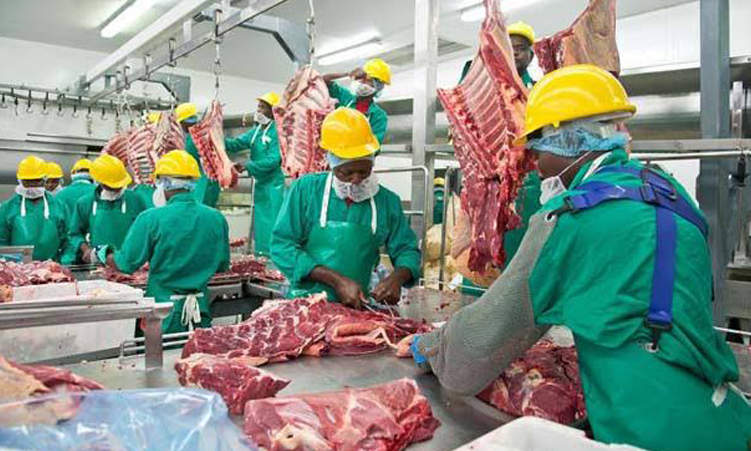
The suspension has raised fears among farmers over the loss of markets and income, while workers in the sector face the possibility of retrenchments as the government and farming community grapple with containing the outbreak.
The EU imported meat and edible meat offal from Namibia worth US$81.52 million, or approximately N$1.34 billion.
Meatco figures show that the meat industry routinely anchors about N$3 billion in annual export value to lucrative European and international markets, including Norway, the EU, China and the United States.
The EU said its decision was aimed at protecting animal health while Namibia works to contain the outbreak.
“Following confirmation of the outbreak, the Namibian authorities acted promptly, notifying the World Organisation for Animal Health (WOAH) and introducing measures to control the movement and ban the export of cloven-hoofed animals and their products,” a statement released by the EU Delegation to Namibia’s Press and Communication Officer, Twaku Kayofa, said on Monday.
Following the notification, WOAH suspended Namibia’s FMD-free status with effect from 22 September 2026.
The EU commended Namibian authorities for their swift action and transparent communication.
“The European Union has remained in close contact with the Namibian authorities to discuss the outbreak and the measures required to protect animal health in the EU, in line with international standards,” the statement said.
It said the suspension covers fresh meat from cattle, sheep and goats, relevant farmed and wild ungulates, and certain processed meat products such as biltong and jerky from Namibia’s previously FMD-free zone.
Processed meat that has undergone the EU’s prescribed high-level treatment to reduce FMD risks can still enter the European market.
“Namibia has responded with speed and transparency, and we commend its veterinary services for their professional response,” EU ambassador Ana-Beatriz Martins said.
DEVASTATING BLOW
Economist Dr Omu Kakujaha-Matundu described the outbreak as “a devastating blow to the industry”.
“This outbreak will have a serious impact on the agricultural sector’s contribution to GDP. Meaning that it will act through the knock-on effect on all other sectors. Hundreds of supply chains will be impacted,” Kakujaha-Matundu said.
He said Namibia had tried its best through surveillance and other measures to keep FMD at bay over its 35 years of independence.
“Not only does FMD outbreaks have an adverse impact on jobs in the agricultural sector, but it will have a domino effect. Almost all sectors will be affected. Money that was supporting the retail sector to kapana business will dry up. Thus, layoffs will cut across sectors, with a devastating blow to the economy,” he said.
BACKBONE OF AGRICULTURE
The meat industry makes a significant contribution to Namibia’s economy.
Agriculture and forestry contribute about 4% to 4.8% of Namibia’s Gross Domestic Product (GDP), while livestock farming accounts for roughly 70% of total agricultural output.
Meat processing and packaging, which the government classifies under manufacturing rather than agriculture, adds another 0.2% to 0.4% to national GDP.
Meatco figures show that Namibia exported meat and meat products worth N$1.43 billion in the first five months of 2026.
CASES RISE
The threat has intensified as more animals test positive for FMD in the //Kharas Region.
Agriculture minister Inge Zaamwani announced on Saturday that another 79 animals from 11 farms tested positive for FMD on Friday.
“The current epidemiological evidence indicates that confirmed infected remain confined in the ||Kharas region,” Zaamwani said.
The Directorate of Veterinary Services tested 531 samples on Friday, with 79 testing positive for SAT-1, an FMD virus similar to the one found in South Africa and Botswana.
Since the outbreak was confirmed on 23 September, 15,000 animals on 61 farms have been inspected, according to Zaamwani.
“The current epidemiological evidence indicates that the confirmed infections remain concentrated within the Karasburg State Veterinary District. However, investigations are ongoing to establish the full extent of infection and determine whether livestock movements may have contributed to potential exposure beyond the currently affected establishments,” she said.
Zaamwani warned farmers to remain vigilant, saying livestock movement could easily spread the disease to other regions.
She said continued surveillance, tracing and laboratory testing remained essential to identify potentially infected animals and prevent the disease from spreading.
As at 2 October, 15,096 animals had been inspected, while 66 of the targeted 81 farms had been visited.
The remaining 15 farms were expected to be completed by 5 October.
N$191 MILLIONS NEEDED
The government has identified a funding requirement of more than N$191 million to implement its critical response to the outbreak.
The funding includes the proposed construction of a disease-control fence to cordon off the containment zone.
“Of this amount, approximately N$47,017,591.50 is earmarked for the construction of approximately 290 kilometres of new fencing along the proposed route from Ariamsvlei through Karasburg to Ai-Ais,” Zaamwani said.
She said the proposed infrastructure would strengthen separation between the containment zone and surrounding areas and support enforcement of livestock movement controls.
VACCINATION AND CULLING
Zaamwani said the government’s control strategy would remain responsive to the evidence available and the operational realities on the ground.
“In view of the spread of the disease within the Karasburg District and the need to strengthen containment, the Ministry will incorporate vaccination of eligible livestock within the designated containment zone, alongside targeted culling, intensified surveillance and strict movement controls,” she said.
The proposed vaccination programme will move from the periphery of the containment zone towards the epicentre.
“Farmers are urged not to undertake vaccination, animal movements or other disease-control interventions independently of the DVS. All such activities must be coordinated through the competent veterinary authorities,” Zaamwani said.
AGRIBANK SUPPORTS FARMERS
Agribank, which bankrolls the bulk of affected farmers, said on Monday that it would stand with its clients during the crisis.
“Agribank recognises that the FMD outbreak and related restrictions have far-reaching implications for the livestock industry, livelihoods and the economy at large, making this a challenging time for both the Bank and its clients,” the bank’s chief executive officer said.
The bank called on stakeholders, communities and businesses to comply with the restrictions and measures introduced to contain the outbreak and restore normal livestock farming and trading conditions.
The CEO said Agribank was deeply concerned about the impact the restrictions could have on its clients.
“The extent of the impact may differ across farming and Agri enterprises operations of our clients. Therefore, any support to be extended to our clients will not follow a one-size-fits-all approach; each request will be assessed on a case-by-case basis, considering the client’s circumstances,” he said.
Affected clients can engage the bank on how the FMD outbreak and related restrictions have affected their operations.
“The Bank will work with each client to identify appropriate repayment arrangements and support options to protect and preserve the agribusinesses, guided by the policies and procedures,” Eiman said.
COMMENTS