
VERIPUAMI KANGUMINE
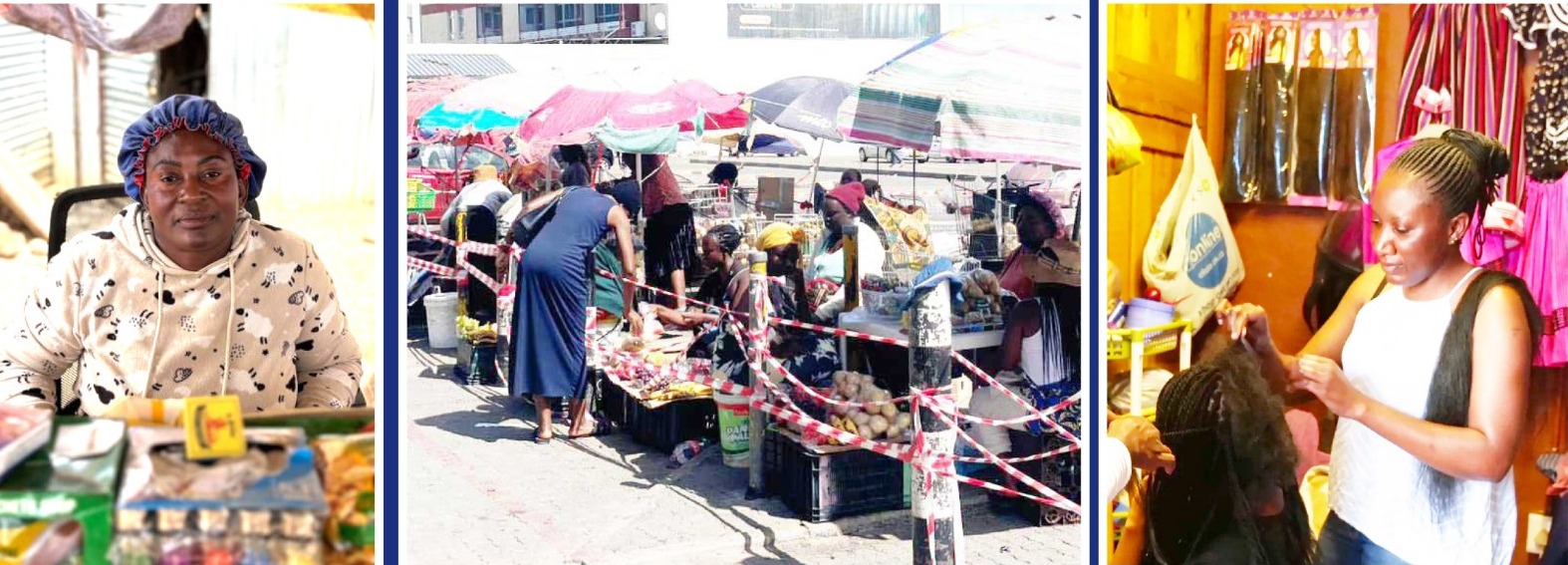
Windhoek’s informal markets are full to the limit. Vegetable sellers, Kapana traders, hairdressers, barbers, locksmiths and food vendors all crowd into the available spaces across the city. Those who cannot find space move to street corners, highways and the entrances of shopping centres just to survive.It is a crowded economy, visibly overflowing and tightly packed. But it is also one of the country’s biggest economic engines.
In November last year, Namibia launched a Diagnostics of the Informal Sector report which showed the sector contributes 26.5% (about N$40 billion) to the national GDP. It also employs 58% of Namibia’s labour force.
Despite this economic importance, many traders say they face daily pressure, uncertainty and are often moved away from where they try to sell their goods.
“What seems to be apparent is that informal markets are, in general terms, treated with a certain degree of disdain by municipal authorities,” sociologist Ellison Tjirera said.
He says many traders operate under constant pressure and fear of removal by City Police.
Informal traders who spoke to Namibia Business Review over the weekend say they live in constant pressure from City Police. They say they are often told to dismantle their stalls, even when they have nowhere else to go.
Windhoek currently has more than 18 established open markets across Katutura, Soweto, Okurangava, Otjomuise and Khomasdal.
The city also has open trading and industrial facilities with lockable kiosks, barbecue stands, food preparation areas, barber shops and car wash facilities.
But traders say these facilities are not enough. They say the spaces are overcrowded and many are forced to trade outside the designated areas.
They say this exposes them to harsh conditions. They also say there is no proper water, sanitation, electricity or security in many of the places where they end up.
For many, the struggle is not only about space. It is about survival.
Ndimbi Mpingana sells fresh produce at the informal market in front of Khomasdal Hyper. She says traders have been asking for basic services for years.
“The City of Windhoek told us that they will bring toilets, water, electricity and shelter from the rain for three years now but nothing has happened,” she said.
She says traders continue to work in difficult conditions while waiting for promised upgrades.
Mpingana says some vendors have now resorted to sharing costs to cope. She says they pay a combined N$1 000 to rent a storeroom near the shopping centre to store their goods after trading hours.
This, she says, is the only way to keep stock safe.
She also says traders must leave their stalls unattended when they go to use toilets inside the shopping centre. In doing so, they lose customers and sales.
She says promises from the municipality have been made since 2023.
“The municipality said they will provide us with electricity, water and toilets in 2023 but we want them to build us a proper market so we are exposed to the rain and cold,” she said.
The lack of water is another daily challenge.
Iyaloo Herman (24) sells fruits and vegetables in front of a mall. She says she buys water for N$6 every day because there is no water at her trading spot.
She says she turned to informal trading to save money for her studies.
Herman plans to study computer classes next year.
“No one is coming to help us, so I decided to start selling fruits and vegetables to help me when I start my classes next year,” she said.
She says life at the market is difficult. She also says the lack of security is a major concern for vendors.
Bernhard Kudumo sells socks, sunglasses and shoes at an informal market in Soweto. He says he is constantly chased away by City Police.
“I have to sell my things here but the police officers say I must move or they will confiscate my goods. But there is nowhere else for me to go and Soweto Market is full,” he said.
He says he cannot leave his goods unattended. He fears they will be confiscated or stolen.
LACK OF FUNDING
City of Windhoek spokesperson Lydia Amutenya says the municipality is aware of the complaints raised by informal traders. She says the challenges are linked to phased development and limited funding.
“The City is aware of concerns raised by traders at Khomasdal Hyper regarding exposure to weather conditions and access to basic services such as water, sanitation, electricity, and shelter,” she said.
She says while some markets have infrastructure, not all facilities are fully serviced.
“While some markets across the city already provide varying levels of infrastructure, it is acknowledged that not all facilities are uniformly serviced, largely due to phased development and funding limitations,” she said.
Amutenya says the City is assessing needs across all trading sites. She says some traders operate in areas like parking spaces where space is already limited.
She says planned upgrades, including shelter, toilets and basic services, depend on available funding.
The City is also working on a Market Development Masterplan. The plan aims to expand trading spaces in line with city growth and demand.
Amutenya said the City faces several challenges. These include rapid growth in informal trading, limited financial resources, vandalism and maintenance problems.
Amutenya said the demand for trading spaces continues to rise across Windhoek.
“The City faces several challenges, including rapid growth in the informal trading sector, which is not regulated at entry level, and increasing demand for trading spaces across the city,” she said.
She said improvements must go through Council approval and be prioritised within the Integrated Development Plan.
Beyond infrastructure, the City says it is also reviewing informal trading regulations with stakeholders.
It also says it is working to improve access to basic services at designated markets.
“The City also continues to promote structured and lawful trading environments that balance livelihood opportunities with safety, hygiene, and urban management,” she said.
But experts say the issue goes deeper than planning and policy.Sociologist Ellison Tjirera says informal traders are often treated unfairly.
Tjirera said some trading spaces are tolerated while others are not, depending on how they developed.
“This creates inequality in how traders are treated. He also calls for proper services such as water, electricity and sanitation to be provided in informal markets so traders can work safely and with dignity,” he said.
Labour researcher Herbert Jauch said the City of Windhoek must take traders’ demands seriously.
“The call by the informal traders is justified as this would be one way to improve their livelihoods,” he said.
He said the informal economy is not a choice for many people.
“The City has an obligation towards its residents and in the light of huge levels of unemployment, the informal economy is the only option to survive for many. The City must therefore create conditions that improve their livelihoods. This is not charity but a supportive developmental task.”
COMMENTS