
STAFF WRITER
PRESIDENT Netumbo Nandi-Ndaitwah says the recent decision by the World Bank to reclassify Namibia from an upper middle income country to a lower middle income country is a true reflection of the income inequalities experienced by the country.
Namibia is deemed one of the most unequal countries with a vast gap between the rich and the poor.
With a population of only three million , most of its citizens struggle for basics while about 10 percent control the means of production.
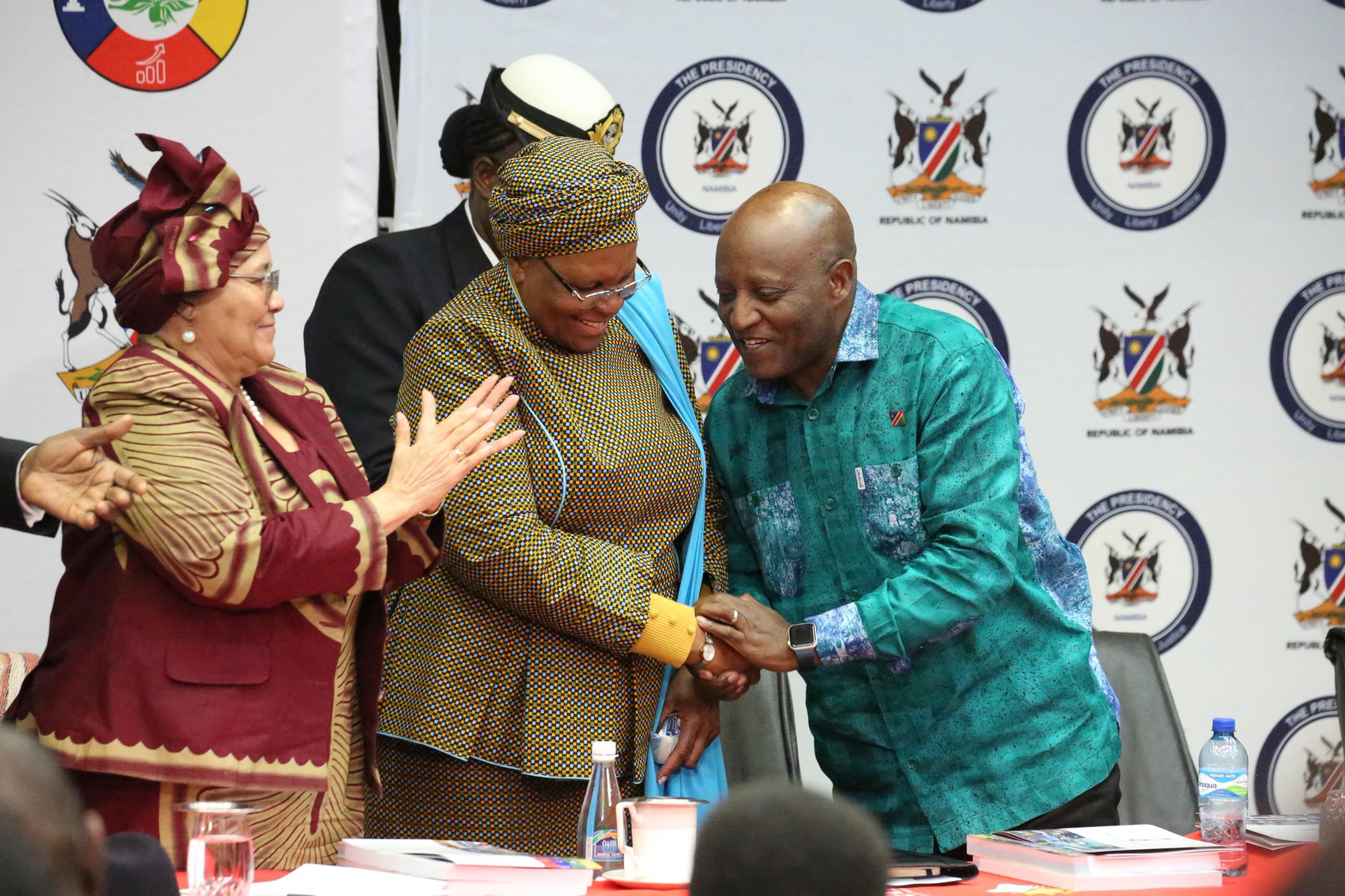
Speaking at the launch of the National Development Plan 6 Nandi-Ndaitwah said her government will target improving the standards of living for Namibians through good governance and efficient public sector service delivery.
“The most recent re-classification of Namibia therefore, to a Lower-Middle-Income country on 1st of July 2025, is deemed more responsive to the reality of the structural imbalances of our economy and large Inequality Gap. Based on this revised classification, Namibia will be more eligible to access grant funding and financing instruments on more affordable terms.
This is beneficial to our developmental agenda and ambitions to foster inclusive growth and shared prosperity,” she said.
She added that, “This does not mean however that there are no challenges to the re-classification. We must commit to hard work and grow the economy to take our people out of poverty. With only 4 and a half years remaining until Vision 2030, this NDP6 is the final instalment, aiming to achieve our objective of transforming Namibia into a developed and industrialized nation.”
According to the President the formulation of the NDP6 has been informed by Vision 2030 and its mid-term review, the NDP5 terminal report, SWAPO Party Manifesto Implementation Plan, regional consultations as well as guiding international development frameworks including the United Nations Sustainable Development Goals, African Union Agenda 2063 and SADC Vision 2050, among others.
“It must be pointed out that our unemployment rate is high because, among other drivers, our industrial capacity remains limited. It is for this reason that NDP6 aims to propel the country towards an advanced industrialised stage, placing due policy emphasis on mineral resources beneficiation and value-addition to stimulate economic growth and development. With the Namibian population currently just over 3 million people and expected to reach 3.5 million by 2030, predominantly young adults of working age,” she said.
COMMENTS