
VERIPUAMI KANGUMINE
Analysts have backed President Netumbo Nandi-Ndaitwah’s decision to reduce food imports by 80% over the next four years.
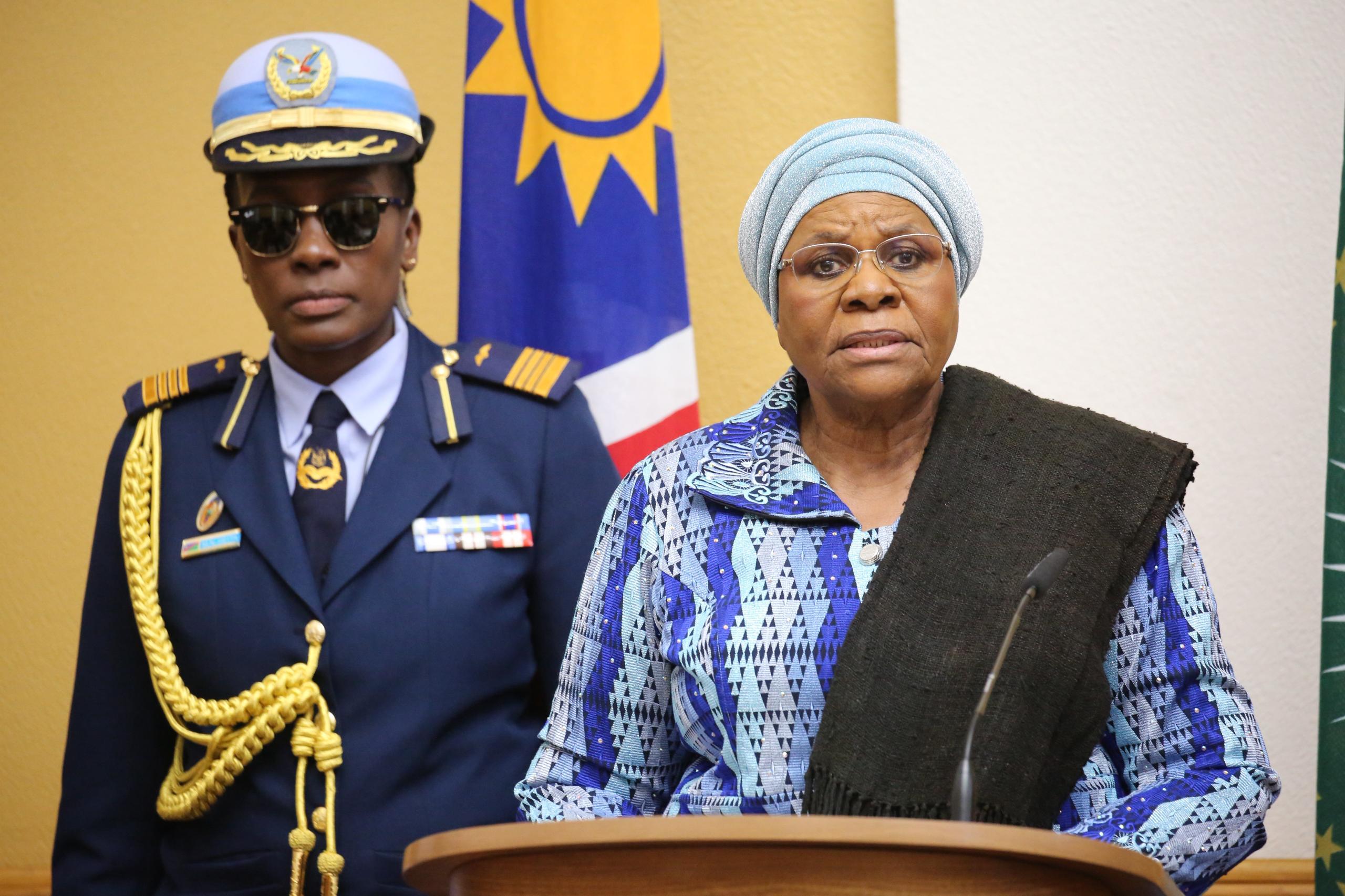
Nandi-Ndaitwah announced the plan while delivering her State of the Nation Address last week in parliament.
She said Namibia exported N$2 billion worth of agricultural products, totalling about 90 000 metric tons last year. The majority of exports consisted of grapes and tomatoes.
According to the Namibian Agronomic Board (NAB), the country produced 98 824 tonnes of white maize, 24 696 tonnes of wheat, 31 501 tonnes of fresh produce and 2 928 tonnes of pearl millet (Mahangu) between 2022 and 2023.
“The 8th administration aims to make Namibia food self-sufficient by reducing the country’s reliance on imported food items by 80% by 2030,” Nandi-Ndaitwah said.
AI INSPIRED AGRICULTURE
Economist Omu Kakujaha-Matundu says the dream of reducing agricultural imports by 2030 could be hampered by climate change and rising agricultural costs.
“Namibia is at the mercy of weather and adverse climatic conditions and changes. Some other variables that could hold Namibia back are high input prices (seed, fertilizer, machinery and equipment, water, electricity, etc,” he said.
Kakujaha-Matundu recommended the government include Artificial Intelligence (AI) models in agricultural production to increase productivity at government green schemes.
The economist added that providing training, extension services, finance and subsidies to crop farmers, as well as economies of scale in production, would help bring costs down and improve competitiveness.
“With hard work, commitment and careful planning, that national target can be achieved,” he said.
QUOTA SYSTEM
Labour researcher Herbert Jauch warned that the government should push import reduction with caution to avoid artificial shortages of fruits and vegetables in the local economy.
“In case the local producers can increase production accordingly, then it is an achievable target but care must be taken not to end up with a shortage of fruit and vegetables on the local market,” he said.
Jauch explained that the country was successful in meeting its production quota system introduced by the Agricultural Bank of Namibia.
An approach that could help farmers move from 56% currently to 80% in half a decade.
Jauch added that this was done after consultations with local producers to ensure that the quotas could be met.
RETAILERS NOT ON BOARD
University of Namibia professor Nelson Mlambo warns that local retailers do not buy locally produced food.
“There is definitely a gap and there is immense potential from small holder farmers and organisations such as the Namibia Agronomic Board is doing a lot to make Namibia self-sufficient.”
He added that “There are serious hiccups on the market side of things, buying local is not really in the minds of many retailers,” he said.
Mlambo, who as a farmer also works with the Namibia Agronomic Board, called on the organisation’s close-border initiative to be fully integrated to motivate small holder farmers to produce more, as the market would be assured.
He also called on government agencies such as the Agro-Marketing and Trade Agency (AMTA) to procure produce so that local farmers have a better market and can supply bigger retail outlets in the country.
“As a farmer right now, for example, I can’t plant lots of winter crops such as carrots and cabbages because when they are ready for harvesting, the retail shops will not buy the produce. Perhaps if there was contract farming, that could have worked,” he said.
COMMENTS