
STAFF WRITER
Namibia has emerged as the next strategic target for the United States as Washington races to secure rare earth minerals and energy resources critical to its industrial and technological future.
Namibia is rapidly emerging as a hotspot after recent discoveries of oil and lithium, boosting its strategic value in the global minerals race.
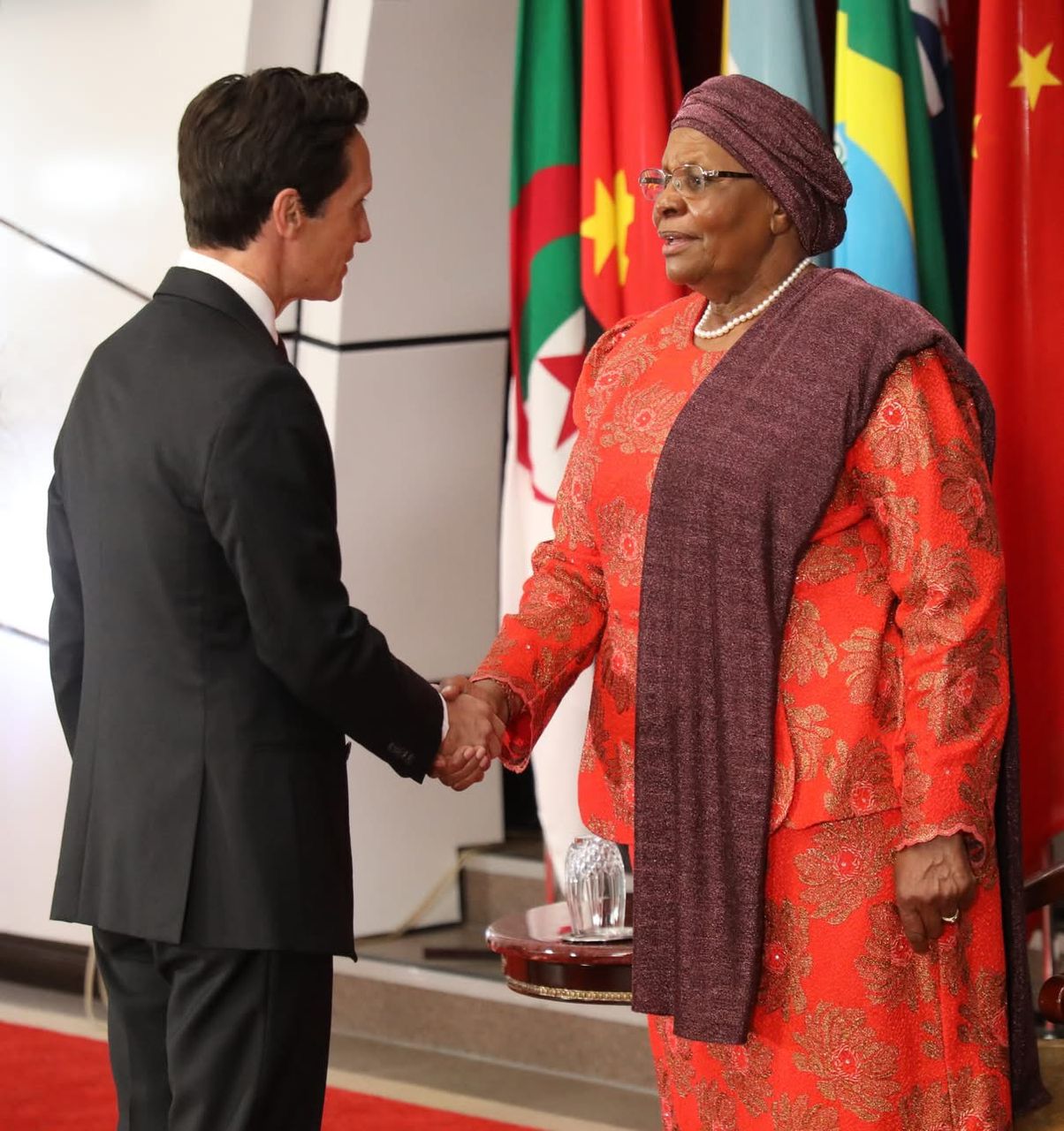
US Ambassador John Giordano, the first politically appointed envoy to Africa under Donald Trump’s current administration, told the British Broadcasting Corporation last week that Namibia offers a strong platform for America to access minerals essential to its economy.
“This is about securing America’s future,” Giordano said.
He added “Namibia sits at the intersection of energy security, critical minerals, and infrastructure required for the artificial intelligence era.”
Giordano said that speed and control matter.
“Time matters and outcomes are what matter. This is about building systems that last. The US has to lead.cYou cannot separate security from capital, and you cannot separate either from energy. The US has to lead in all three,” he said.
DRC DEAL SHOWS THE PLAYBOOK
The US has already tightened its grip on the Democratic Republic of the Congo following a Trump-brokered ceasefire with Rwanda.
In return, Trump publicly confirmed that the US would extract minerals from the Congo to support American industrial needs. The agreement includes security guarantees and diplomatic backing in exchange for preferential access to future mining concessions.
The deal reshapes the Congo’s mining landscape and makes it harder for competitors such as China to expand further, despite Chinese firms controlling about 80% of global cobalt output from the country.
Last year, Washington also signed a “resources-for-security” mining agreement with Kinshasa to secure minerals essential to US technology, economic strength, and national security.
While the US pushes raw mineral extraction abroad, Namibia and other African nations are increasingly calling for value addition and local processing.
NOT AN IDEAL PARTNER?
Political analyst Sakaria Johannes warned that Namibia must avoid exploitative deals.
“It is quite interesting that America has a plan for Namibia. Does Namibia have a plan for America?” Johannes told Namibia Business Review this week.
He said Namibia must prioritise policies that promote beneficiation.
“In many cases, Americans just want to benefit from the resources of small countries instead of helping those countries develop,” he said.
Johannes also warned Namibia to choose partners carefully.
“It is important to choose a trading partner who respects your sovereignty. In this case, I do not think America is that partner,” he said.
VALUE ADDITION VS EXTRACTION
Namibia approved its critical raw materials policy in 2023. The strategy shifts focus from exporting raw minerals to domestic processing, local ownership, and industrial development.
The US is intensifying efforts to secure uranium, lithium, and rare earth minerals from African countries to reduce reliance on Chinese-dominated supply chains.
At the same time, the US International Development Finance Corporation is investing more than US$550 million (N$7.9 billion) in rail links connecting mineral-rich regions in Zambia and Congo to Angola’s Port of Lobito. The project aims to create supply routes aligned with Western strategic interests.
RESOURCE IMPERIALISM FEARS
Analyst Henning Melber described Giordano as a political envoy advancing Trump’s protectionist agenda.
He noted that even the Financial Times criticised Washington’s approach as a new form of resource imperialism.
“This pushes Africa further into a peripheral status but resources also offer negotiation power. African countries have agency,” he said.
Melber said Namibia can negotiate better deals but only with a clear foreign policy strategy.
President Netumbo Nandi-Ndaitwah last year at an investor conference urged Namibia and the African continent to abandon a “begging” or “poverty mentality” in international dealings, advocating instead for self-reliance and the leveraging of natural resources to drive development.
Analyst Professor Johan Coetzee said Namibia has already failed to maximise value from its minerals, especially under dominant foreign mining ownership.
“What are they doing for mineral processing?” he asked.
“That is where the real money lies,” he added.
He said American investment could introduce competition if structured properly.
“The core problem is not foreign exploitation. It is Namibia’s own governance shortcomings, ”Coetzee said.
He called for stronger contract oversight, technical expertise, and joint ventures that ensure skills transfer.
NAMIBIA OPEN — BUT ON ITS TERMS
Deputy minister of industry, mines and energy Gaudentia Kröhne said Namibia remains open to investors but beneficiation is non-negotiable.
“Namibia is open for business, not only for extraction, but for partnership across the entire mining value chain. We are positioning both large-scale investors and small-scale miners within an integrated pipeline for sustainable growth. From exploration and mine development to processing, beneficiation, and downstream industries, Namibia welcomes partners at every stage. Beneficiation is not an aspiration, it is a national policy direction,”
COMMENTS