
STAFF WRITER
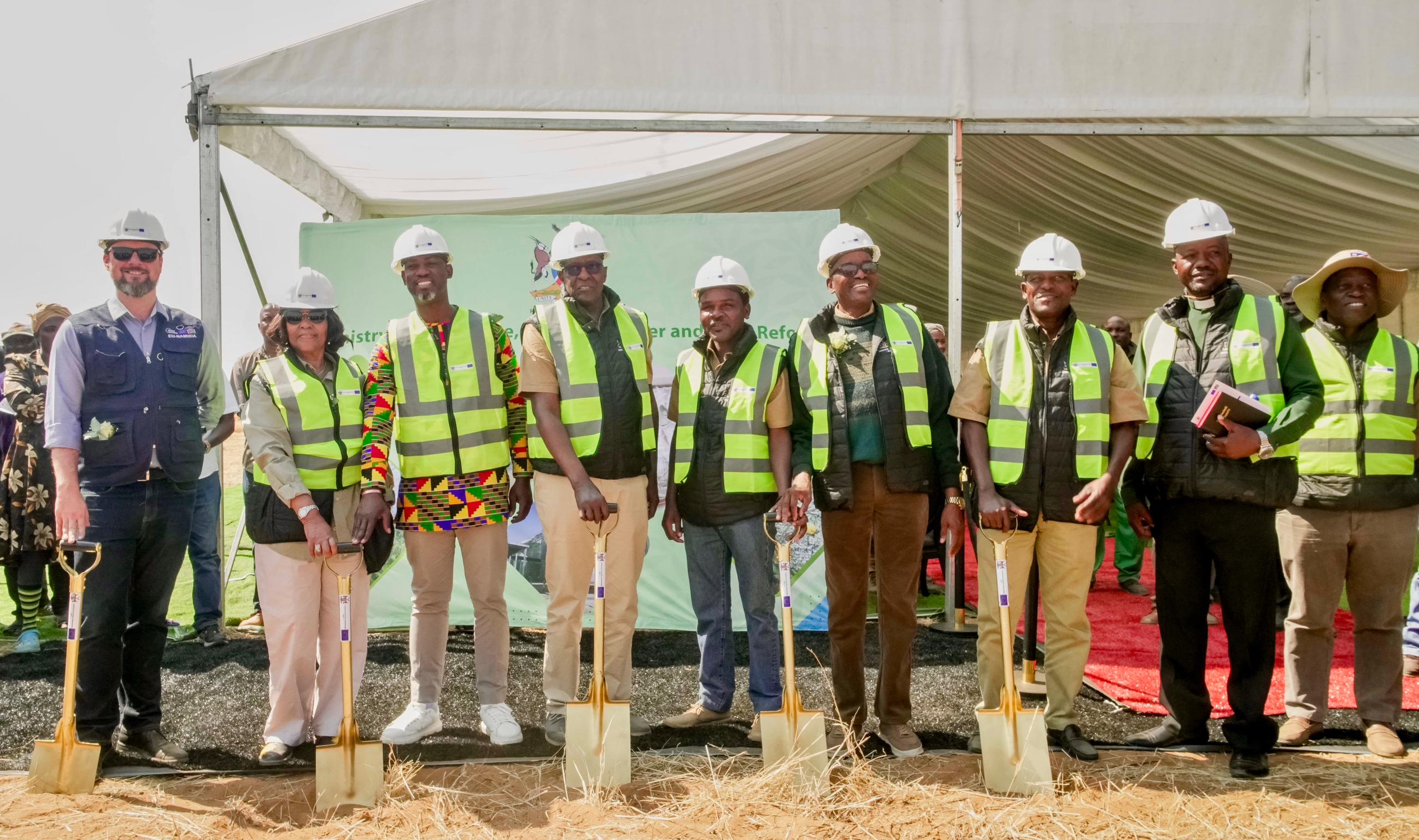
Namibia in partnership with the European Union, officially broke ground on the N$79 million Etunda Feedlot with a 1,000-cattle standing capacity.
The feedlot is designed to uplift the communal livestock sector in the Northern Communal Areas
(NCAs).
The Etunda Feedlot is a flagship initiative under a broader EU project aimed at supporting the livestock sector in the NCA, with a total budget of N$400 million to support farmers in the NCA.
The project is implemented by the Ministry of Agriculture, Fisheries, Water and Land Reform (MAFWLR) with the National Planning Commission (NPC) as the contracting authority.
Speaking at the event, EU Chargé d’Affaires, Ian Dupont highlighted the EU’s long- standing partnership with Namibia, noting that the Livestock Support Programme represents EU-Namibia collaboration at its best.
“This represents sustainable and inclusive
development, aimed at bringing real empowerment to livestock farmers in the Northern Communal Areas. Together with the government of Namibia, we want to support the building
M of systems and infrastructure so that farmers in the NCA can benefit from regional and international trade, such as through SACU or the AfCFTA,” he said
Minister of Agriculture, Fisheries, Water and Land Reform, Inge Zaamwani said the Etunda Feedlot speaks directly to Namibia’s national goals of food
security, poverty reduction and climate-resilient livestock management.
The Etunda Feedlot is one of seven infrastructure projects under this programme, which also
includes upgrading of abattoirs, artificial insemination canters, auction facilities, and quarantine stations across Namibia.
All projects are currently under construction following technical handovers facilitated by the NPC.
A number of trucks and vehicles have also been recently handed over to the Ministry of Agriculture to support this mission.
These developments are designed to support farmers in the NCA to participate in local, regional and international trade, taking into account the risks of communicable diseases such as the Foot and Mouth Disease, Lumpy Skin Disease and others, for which the veterinary cordon fence remains an important tool to manage these risks. Complementary investments livestock traceability, fodder production, and farmer training further reinforce the programmer’s long-term sustainability.
COMMENTS