
TIRI MASAWI
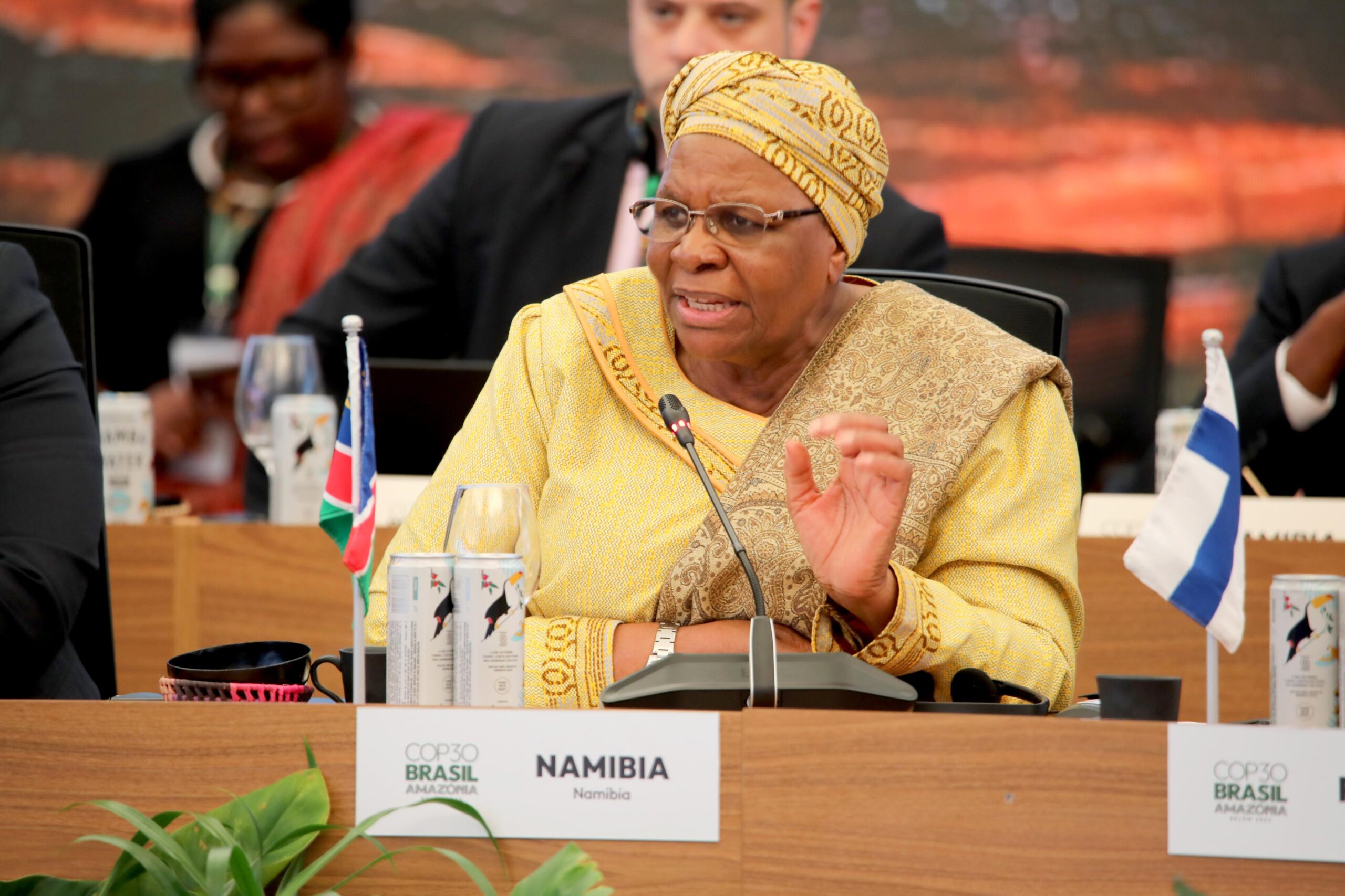
President Netumbo Nandi-Ndaitwah says Namibia needs about N$108 billion (US$6 billion) to fight the impact of climate change.
The President told delegates at the ongoing United Nations Climate Change Conference COP 30 on Friday that Namibia identified eight sectors that include agriculture to ensure food security, water resources, biodiversity and ecosystems, fisheries and aquaculture, health, infrastructure, coastal management and other cross-cutting issues for immediate funding.
“Adaptation in these sectors requires an estimated 6 billion USD, of which about ninety percent depends on international support. At the same time, mitigation across various sectors is estimated to cost USD 9 billion of which 10% is expected to come from domestic resources,” she said.
She said Namibia has been working tirelessly to address the effects of climate change, through adaptation and mitigation, as demonstrated through a record of action and transparency.
“Our Second Updated Nationally Determined Contribution commits to reducing projected greenhouse-gas emissions by 7.7 million tonnes of CO₂-equivalent and to increasing removals by 4.2 million tonnes, for a total
mitigation of 11.9 million tonnes by 2030.
“In pursuit of this commitment, our First Biennial Transparency Report and Fifth National Communication, submitted to the UNFCCC Secretariat on the 31st December 2024, confirmed that Namibia remains a net carbon sink, and that carbon removals in the land sector have increased by forty-five percent since 1990,” NandI-Ndaitwa said.
She said such efforts underscores both the integrity of Namibia’s reporting and the effectiveness of its land-use policies.
The President said Namibia continues to take positive steps in her quest to meet commitments.
“I officially launch the Oshivela project, which is one of the world’s first industrial-scale green iron plants powered by green hydrogen, operating on a principle of zero emissions.
It is Africa’s first green iron plant that makes Namibia one of the global leaders in green industrialization and positions the country as a viable hub for sustainable energy.
“The plant will avoid 27,000 tonnes of CO2 from being emitted into the atmosphere. This is part of the transformative Green Hydrogen Strategy that will see the country take decisive steps towards cleaner and renewable energy sources,” she said.
She said currently Namibia’s key national commitments include strengthening integrated water-resource management and groundwater recharge, safeguarding the supply of clean water to households, agriculture and industry, expanding drought-resilient agriculture and climate- smart irrigation, promoting conservation agriculture and the use of drought-tolerant crop varieties to protect rural incomes and national food security.
“These national commitments also include restoring degraded rangelands and forests, protecting biodiversity and reinforcing Namibia’s natural carbon sink, reinforcing climate-resilient infrastructure, including roads, bridges, energy systems and coastal protection, to safeguard critical economic assets and trade corridors.,” she said.
COMMENTS