
STAFF WRITER
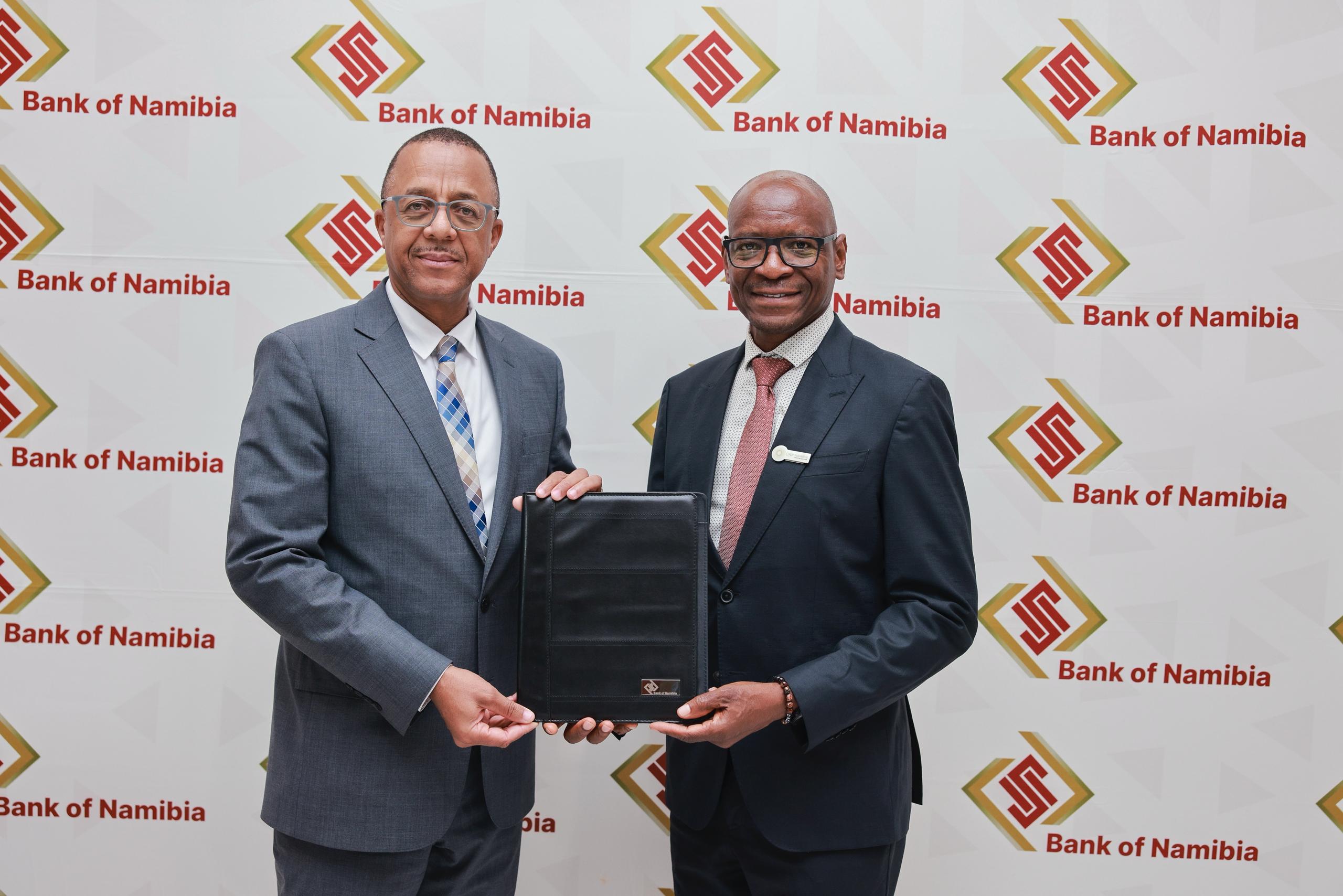
The Bank of Namibia has signed a gold purchase agreement with QKR Namibia Navachab, marking a significant milestone in the Bank’s ongoing efforts to strengthen its reserve management framework.
The agreement was signed by Bank of Namibia Governor Ebson Uanguta and Navachab Gold Mine Chief Executive Officer George Botshiwe.
According to a statement released by the two institutions the agreement provides for the structured purchase of domestically produced gold, in line with international reserve management standards and the Bank’s long-term strategic
objectives.
The statement said the development forms part of the Bank’s broader gold acquisition programme, which aims to strengthen the composition of reserve assets, enhance financial resilience, and support the country’s capacity to respond to external shocks.
The Bank of Namibia said it supports the retention of national resources and aligns with the Bank’s mandate to safeguard macroeconomic stability and promote national economic interests.
“This agreement represents an important step in advancing the Bank’s reserve
diversification strategy. Gold continues to play a critical role as a store of value and a hedge against global uncertainty. By partnering with domestic producers, we are not only strengthening our reserves but also supporting local value creation and economic development”, said Uanguta.
The Bank will implement the gold acquisition programme on a phased basis, supported by established governance structures, risk management processes, and operational safeguards.
‘’As Navachab Mine, are proud to partner with the Bank of Namibia on this important initiative which underscores the vital role that public-private partnerships play in advancing sustainable development. When industry and institutions work together with clear intent, we are able to move beyond extraction and towards meaningful, long-term value creation’’, said Botshiwe.
The central bank said the approach ensures that acquisitions are undertaken prudently, with due consideration to market conditions and institutional readiness.
COMMENTS