
TIRI MASAWI
More than half of Namibia’s population struggles to access enough food, according to the United Nations’ Food and Agriculture Organisation (FAO).
About 57.2% of Namibians experience moderate or severe food insecurity, leaving many unable to consistently access safe and nutritious food.
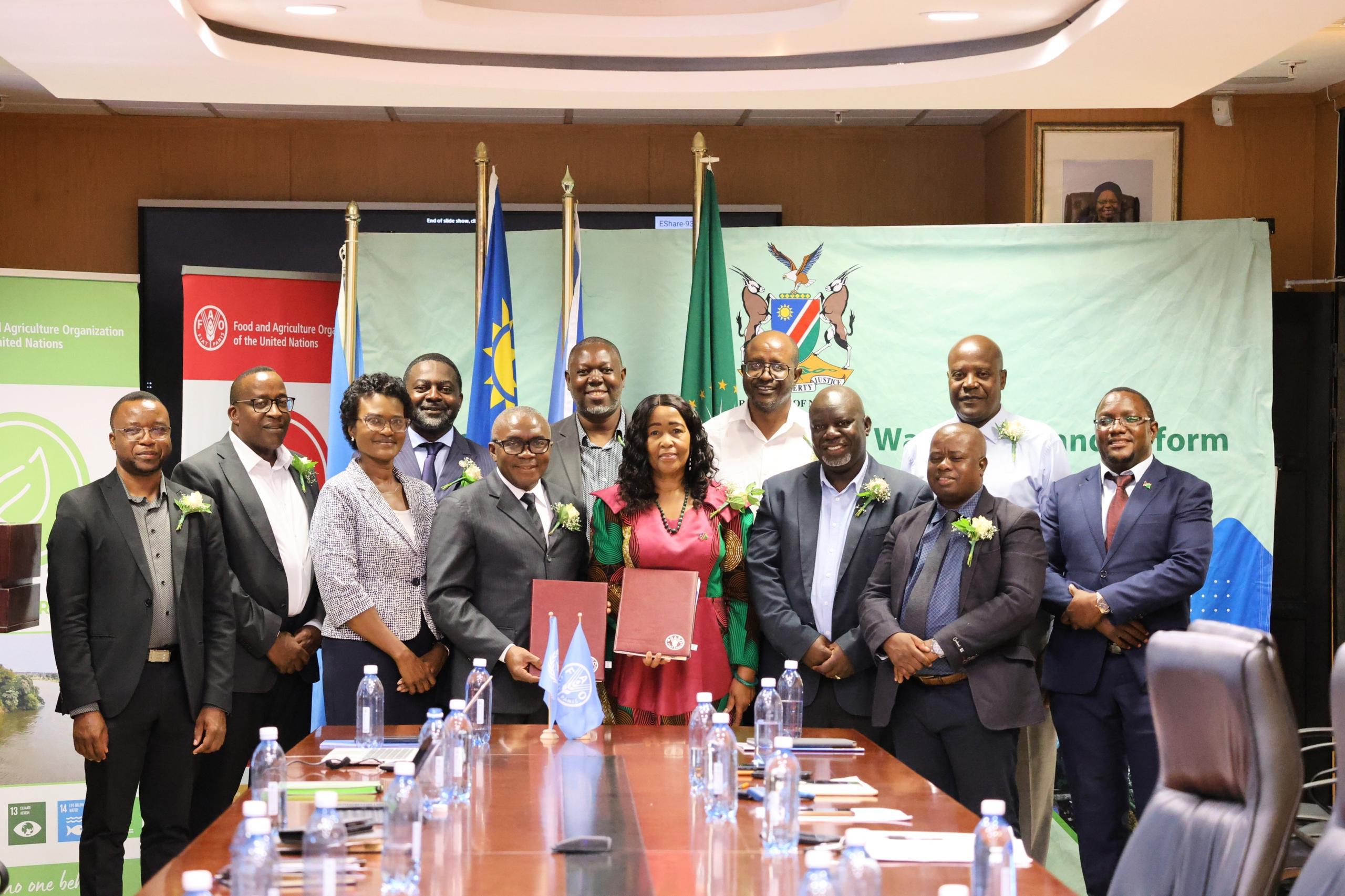
FAO country representative Patrice Talla Takoukam highlighted the situation during the signing of the Namibia–FAO Country Programme Framework on Monday. The programme aims to tackle food insecurity and strengthen agricultural development over the next five years.
The FAO defines food insecurity as a lack of reliable access to sufficient food, forcing people to live with hunger and the fear of starvation. It reflects weaknesses in one or more of four pillars: availability, access, utilisation, and stability.
“Nearly one in five Namibians is undernourished. More than one in five children under the age of five is stunted. Namibia’s Agriculture Orientation Index stands at just 0.26, a figure that tells us that public investment in the sector most critical to rural livelihoods and national food security has been declining for decades, from 0.54 in 2001 to where we stand today,” Talla Takoukam said.He stressed that these are not just statistics. “These are human realities,” he said, underlining the urgency of the challenge.
Despite the worrying numbers, Talla Takoukam expressed confidence in the newly signed framework. He described it as “a credible, country-owned roadmap to change the trajectory” of Namibia’s food and agricultural systems.
The programme is backed by a N$256 million budget, but only N$64 million has been secured, leaving a gap of N$192 million. Talla Takoukam urged strategic approaches to closing the gap, noting that global funding for development is shrinking and competition for resources is growing. “Good intentions and comprehensive frameworks are not enough. We must make the case for investment with rigour and demonstrated results,” he said.
The Country Programme Framework aligns with Namibia’s Sixth National Development Plan (NDP6), the UN Sustainable Development Cooperation Framework 2025–2029, Vision 2030, and the Harambee Prosperity Plan II. It also follows FAO’s global “Four Betters” vision: better production, better nutrition, a better environment, and a better life for all.
According to Talla Takoukam, Better Production focuses on reducing Namibia’s reliance on food imports, which currently meet 50% to 80 % of national needs. This involves improving productivity, supporting climate-smart farming, and empowering smallholder farmers, who make up over 70% of the sector.
Better Nutrition aims to tackle the country’s triple burden of malnutrition: stunting in children, micronutrient deficiencies in women, and rising diet-related disease in urban areas. He added that in 2024, only 62.3 percent of women aged 15 to 49 met minimum dietary diversity standards, highlighting the need for improvement.
Better Environment involves protecting and restoring rangelands and forests, which have declined from 10.3% to 8.4% of land area since 1990. Meanwhile, Better Life ensures that progress reaches women farmers, young people, communal smallholders, and fishing communities.
Talla Takoukam highlighted the importance of partnerships. He said Namibia is not working alone, and FAO is one of several operational partners delivering results on the ground.
“Through south–south cooperation with China, agricultural experts are helping Namibian farmers with crop production, poultry, and aquaculture. The Japan-funded drought resilience project will reach 6 000 youth- and women-led households across Erongo, Kunene, Omaheke, Otjozondjupa, and Hardap with agro-inputs, livestock support, and climate-smart training,” he said.
Talla Takoukam concluded by highlighting the structures being put in place to ensure success. “We are building the institutional architecture, working groups, coordination mechanisms, monitoring frameworks to turn Namibia’s agrifood transformation strategy from paper into practice. Looking ahead, FAO will mobilise new partnerships through the Hand-in-Hand initiative and the One Country One Priority Product initiative,” he said.
COMMENTS