
IMELDA AMBONDO
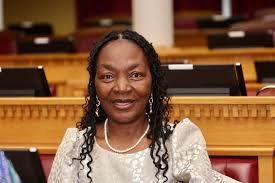
Minister of Finance, Ericah Shafudah says Namibia will spend N$14.4 billion in the 2025/26 financial year servicing debts.
Shafudah told Parliament last week that this constitutes 15% of total government revenue.
She said the government is pushing to strengthen its fiscal discipline while sustaining social spending.
Shafudah said the government is implementing debt sustainability strategies to curb rising interest costs without derailing economic growth.
“Debt servicing or interest payments are consuming a growing share of the budget—approximately N$14.4 billion for FY2025/26, about 15% of revenue. We are phasing in deficit reduction, fostering growth through smart spending, and upholding social protections,” she said.
Following the redemption of the Eurobond on 29 October 2025, Shafudah revealed that Namibia’s foreign-to-domestic debt ratio now stands at 85:15, with 90% of foreign debt denominated in South African Rand (ZAR), leaving the country’s overall portfolio 99% exchange rate free.
The minister addressed concerns about the low execution rate of capital projects, saying the Ministry of Finance together with the National Planning Commission are working to improve delivery through public expenditure reviews.
She rejected claims that the government borrows for consumption, saying that domestic revenue fully covers operational expenditures.
“We have made significant progress in revenue mobilisation compared to peers who face challenges generating adequate domestic resources,” Shafudah said.
Highlighting agriculture as a key growth sector, Shafudah said green scheme projects will be operated at full capacity through public-private investments to increase food production and create jobs.
She also confirmed that funding has been secured for water projects through NamWater and the Ministry of Agriculture, Water, Fisheries and Land Reform, aimed at addressing shortages in drought-affected regions.
To strengthen higher education, the government has injected an additional N$663 million into the Namibia Student Financial Assistance Fund (NSFAF) to support free tertiary education. Further funding adjustments will be made in the 2026/27 budget.
Shafudah provided updates on the National Youth Development Fund (NYDF), which attracted 11,475 applications during its pilot phase. Of these, 42 projects worth N$14.78 million have already been approved across all 14 regions.
“The evaluation process for the remaining applications will be concluded by November 2025,” Shafudah said, adding that the age eligibility for the Fund has been expanded to 18–45 years to promote inclusivity.
The Sovereign Wealth Fund, launched in 2022 with an initial N$267 million, continues to perform strongly. “As of 30 September 2025, the Fund has achieved an annualised return of 16.05% since inception,” Shafudah revealed. She noted that the Sovereign Wealth Fund Bill is now with legal drafters for review.
Shafudah thanked Members of Parliament for their “constructive contributions” and urged them to approve the Appropriation Amendment Bill, 2025 and the Mid-Year Budget Review documents.
“Together we can overcome our fiscal challenges and ensure sustainable growth,” Shafudah said.
COMMENTS