
…Small traders struggle to survive in tourism
Ernst Calitz
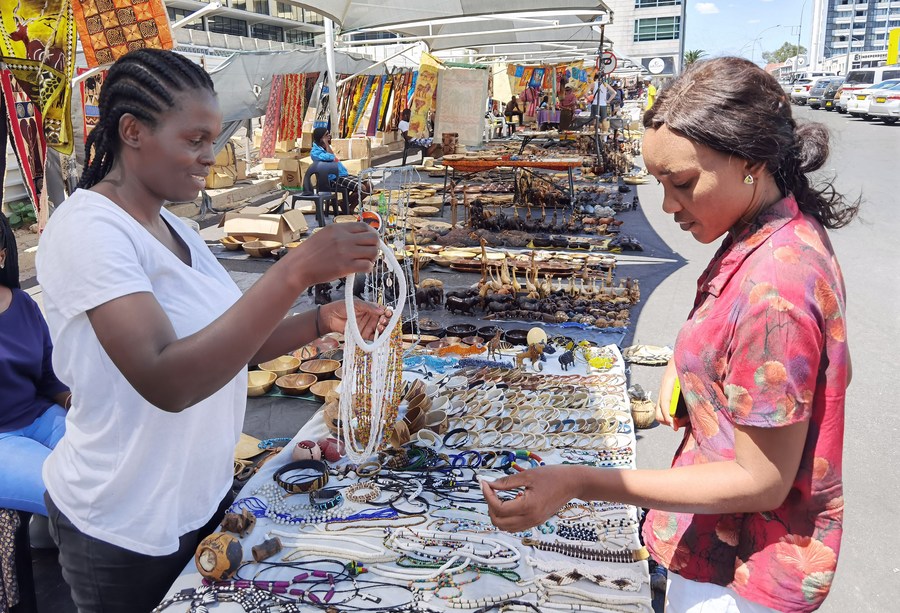
Windhoek’s city centre is crowded with tourists visiting hand-crafted stalls, taking photos and browsing but only a few are buying.
While the Ministry of Environment and Tourism’s 2024 Tourist Statistical Report, launched late last year, indicates that tourism is rebounding, street traders like 45-year-old Chris Manya have yet to feel the benefits.
Since the COVID-19 pandemic nearly crippled the industry in 2020, Manya has struggled to make ends meet. He quietly arranges his hand-crafted goods in Windhoek’s Post Street Mall, often without making a single sale.
Shy, and under his breath he told Namibia Business Review; “We see them [tourists] walking about, but the business itself has declined a lot. Since the Coronavirus started, we have experienced a lot of… I don’t know. They don’t come.”
Manya travels from the high density suburb of Katutura to Windhoek’s Central Business District (CBD) to sell his goods, trying to support his two children, oftentimes arriving at 6:00 and leaving 12 hours later, occasionally without earning anything for the day.
“Of course we are not making enough to support a family. You are expected to contribute where you can, but you can’t anymore. And also supporting just a two-child family, it’s tough, very hard.”
PHOTOS DON’T PAY BILLS
B Fraans, an older woman occupying the stall next to Manya’s, spoke of similar hardships.
“The tourists come and they take photos and leave. I think the problem is the people who walk with the tourists [guides], they don’t encourage the tourists to come and buy from us. They just chase them on to continue walking,” she lamented.
She also said she can see more tourists on the streets, but they are not buying her goods, as they did before the pandemic. She says that it’s the worst it’s been since she started her business around twenty years ago.
“I don’t know the business like this.”
She tells Namibia Business Review that she used to have a bank account, and made enough money to deposit in it, but now she barely makes N$500 a month.
She also blames the local municipality for not repairing the public bathrooms around the corner from her stall, a situation that she says chases away possible clients. “Dit ryk soos piss,” (It reeks of urine) she complained.
Most, if not all, the traders in the area tell a similar story, about feeling left out from the tourism industry’s recovery
THE NUMBERS
According to the tourism ministry’s report, 2024 saw a near 79% industry bounceback to the pre-COVID-19 levels of 2019, with 1,257,093 tourists visiting Namibia, a 45.5% increase from 2023.
South Africa still holds the lion’s share of visitors, accounting for 38.5%. While Germany still ranks the highest in terms of non-continental tourists, with about 111,164 visitors in 2024.
A study by major global consulting firm McKinsey & Company does, however, shed some light on why traders like Chris and B. Fraans, who make a living from selling traditional goods, might be left behind.
The firm surveyed over 5 000 travelers from Germany, China, the United Kingdom, the United States and the United Arab Emirates and found that the way tourists are spending has changed from previous years.
McKinsey & Co found that 14% of those surveyed are now looking for carefully curated experiences, while carefully watching costs, like potentially cutting spending on buying souvenirs. At least 11% of the travelers were also older and predominantly cared about the cost of the trip, again, cutting spending. Another 18% of respondents indicated that they would rather spend money on experiences when traveling.
The surveyed group from Germany, Namibia’s largest European market, indicated that 45% of travellers wanted to escape familiar environments and daily routines. They said this familiar environment drives them away from Namibia’s urban centers, like Windhoek, towards more nature-centric experiences, like lodges and campsites.
SHIFTING STRATEGIES
The Gondwana Collection, a leading player in Namibia’s tourism sector, had to aggressively shift its strategy after the COVID-19 pandemic. According to the Collection’s managing director Gys Joubert, Gondwana would not have survived if this shift didn’t occur.
Joubert explained that pre-pandemic tourism in Namibia heavily relied on bigger tour groups, especially from Germany, but these groups became less prominent after COVID-19.
“So the first people who started travelling to Namibia [after the pandemic] were your independent travellers. What they call a Fully Independent Traveller (FIT),” Joubert explains.
According to Joubert, the FITs are more likely to rent their own vehicles, as opposed to using tour bus companies, and drive across the country.
Joubert said Gondwana observed that group travellers were also more conservative and willing to trust pre-established systems and tourist institutions, whereas the FITs were more adventurous and willing to try new experiences. He said it became essential to offer the opportunity to tourists to rent their own vehicles and travel the country independently.
This shift does however mean that travellers are now more likely to rent a vehicle when arriving at Namibia’s airports and spend their first night in locations outside of Namibia’s urban centers like Windhoek where traders like B. Fraans and Chris Manya sell their goods.
THE WAY AHEAD
Though policy might not be able to hopefully bring artisans and craft traders into the fold, other African nations have taken active measures to include them.
Botswana’s government is currently working on a tourism initiative called the “Blue Route” which will connect pre-existing popular tourist routes with craft markets, local enterprises, and rural communities to help foster inclusive economic growth.
Other initiatives like the United Nations Tourism and TUI Care Foundation’s ‘Colourful Cultures’ grant provides financial support and training to artisans and craftsmen across 10 African countries, including Namibia.
The Namibian Tourism Board spokesperson Flora Quest suggested that informal markets should be linked to the tourism value chain.
She suggested incentivising or requiring tour operators and lodges to incorporate accredited local markets into itineraries, upgrading existing markets to meet standards, and designating them as tourist stops.
Quest said that expanding low-cost digital payment systems can help address practical barriers that exist which prevent tourists from spending money.
“Light-touch registration systems that unlock benefits rather than impose penalties, combined with small-scale finance and public or corporate procurement of local crafts, would further stabilise incomes,” she said.
COMMENTS